5 Stars
Made in Germany
Free Delivery
5 Stars



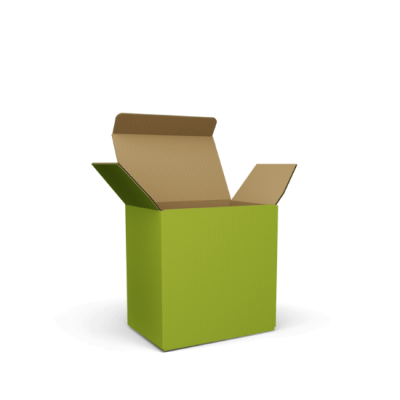
 Folding boxes


 Shipping boxes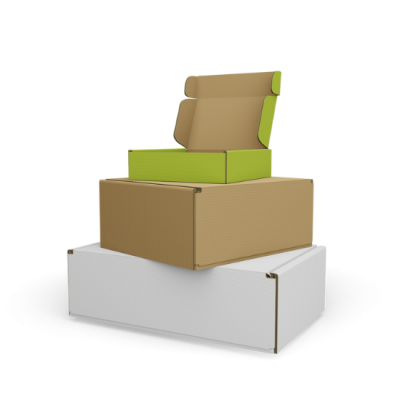

 Stand-up pouch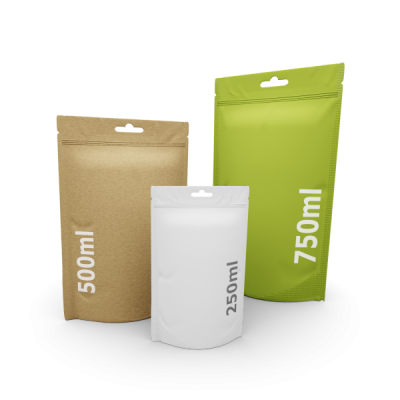


.png) Labels
Labels 

 Paper cans
  Sample boxes
 Corrugated cardboard is one of the most widely used materials in the packaging industry. This is due to its characteristics, because due to the corrugation, the material has a very high load-bearing capacity with a very low dead weight.
Corrugated cardboard is therefore particularly suitable as transport packaging, both in e-commerce and in other areas such as moving boxes. Due to its properties, however, it is also used as product packaging for particularly sensitive or heavy products.
Your individual corrugated cardboard boxes:

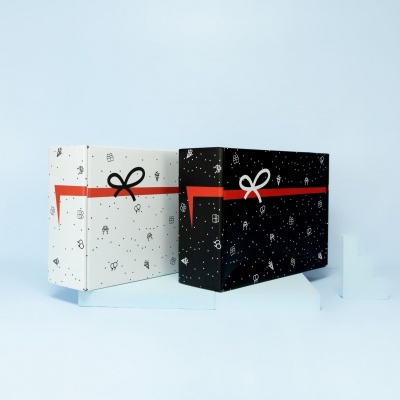
Corrugated cardboard cartons FROM THE MANUFACTURER
Our packaging
Cardboard Boxes for safe transport
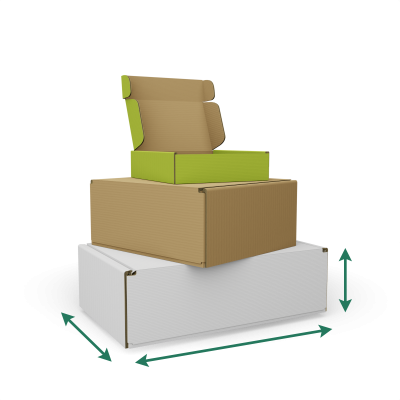
Have American cardboard boxes printed to measure
.png "Hinged box - maxi letter box, large letter box, DHL parcel")
Customised folding box made of corrugated cardboard
Cardboard Boxes for safe transport.






CONTACT US

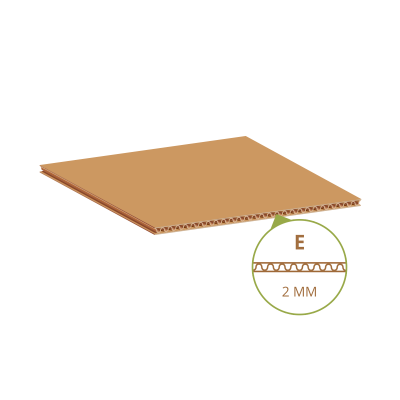
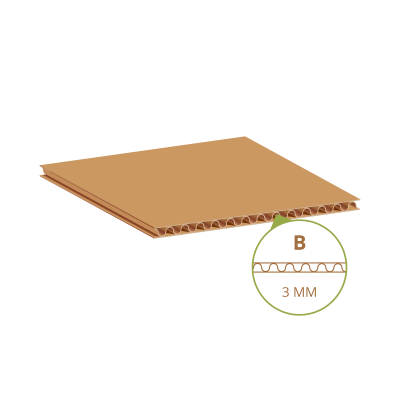
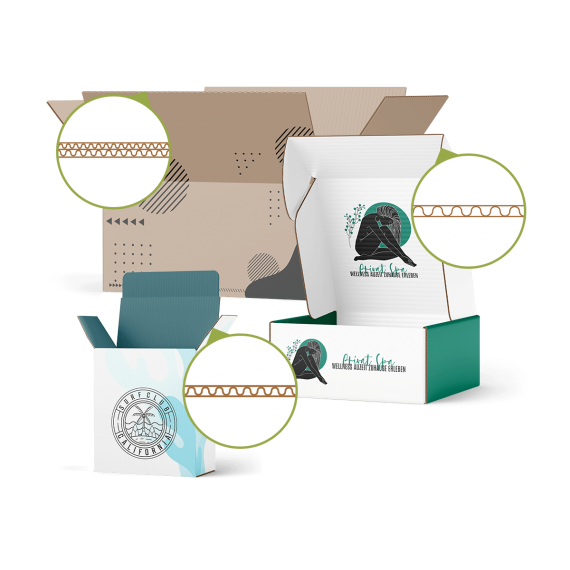
Due to the fact that shipping boxes with different corrugations and flute heights have different advantages and disadvantages, different types of corrugated cardboard have developed over time. Although not all types of corrugated cardboard are used in the mail order business, we have provided a complete list of all the different types of corrugated cardboard here. Basically, the different types are divided into classes:
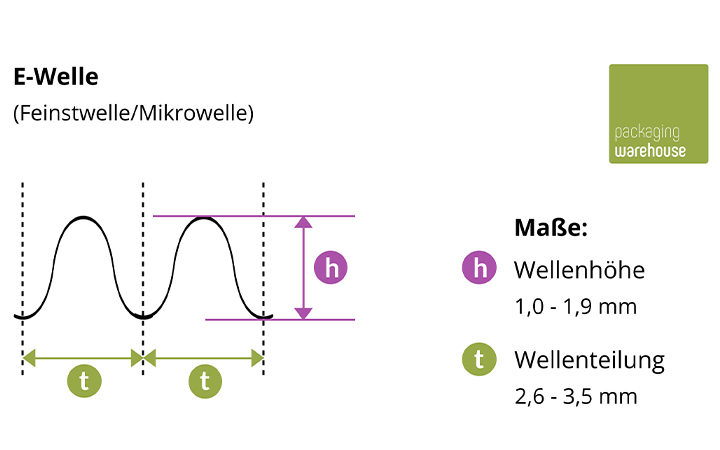
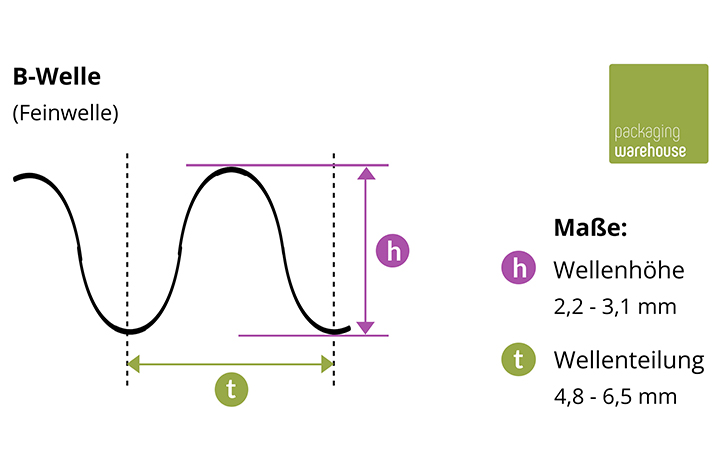
So, for the production of product or shipping packaging, there are various corrugated cardboard boxes available, all of which have their advantages and disadvantages. But what if you need a corrugated cardboard box that, on the one hand, has a very large load-bearing capacity, but on the other hand, can also display a printed image without any losses?
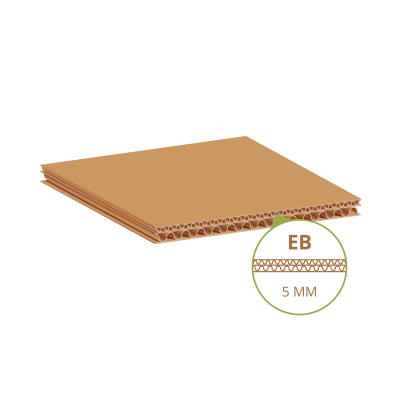
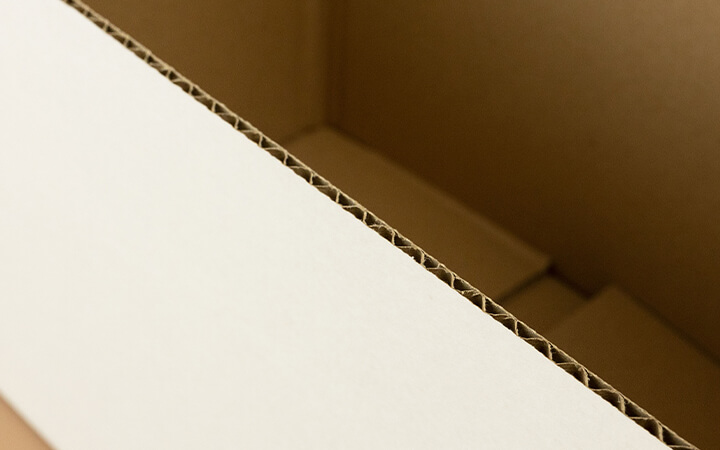
A combination of two flutes is suitable for this case. A good example, which is also used at packaging warehouse, is the combination of E- and B-flute. For this a B-flute is used for the inside and glued by an intermediate sheet to an E-flute, which serves as the outside. The product combined in this way is called EB flute. In this case, it is no longer referred to as single flute board but as double flute board.
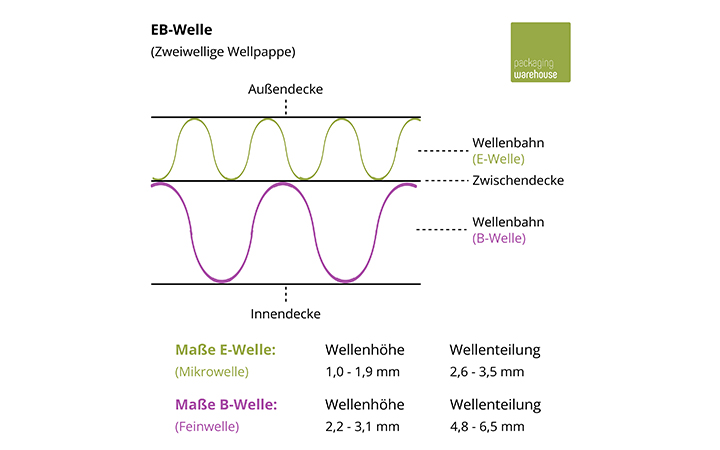
The combination of these two shafts results in a new product, so to speak, which combines the excellent load-bearing capacity of the B-shaft with the smooth surface of the E-shaft. The cardboard produced in this way is therefore suitable for heavy packaged goods on the one hand, but can be printed with high quality on the other. This is why EB flute is one of our bestsellers when it comes to product packaging for heavy goods such as wine bottles or particularly fragile goods such as flacons. This is because product packaging must not only transport the packaged goods, but also the brand values, slogans, application instructions or even the color CI without any losses.
The first patent for corrugated cardboard was approved many years ago. It dates back to 1856 and was filed by the Englishmen Edward Ellis Allen and Edward Charles Healey. However, the intended use was different at that time: corrugated cardboard was used as an insert to stabilize hats or suitcases, for example.
However, the inventors of corrugated cardboard did not yet have in mind the application for which it is primarily used and known today. Corrugated cardboard was further developed, but also not yet perfected, by an American named Albert L. Jones. He produced ruffles and neck ruffles. For this purpose, he used a machine with which it was possible to work corrugated sheets into fabric.
Instead of fabric, he processed cardboard with this machine and used the resulting corrugated cardboard packaging as outer packaging for everyday objects. But the brilliant idea came to his compatriot Oliver Long three years later: He glued the corrugated sheet between two smooth sheets of paper and corrugated cardboard was born with his patent of 1874 as the product that today is indispensable in the mail order business.
The secret of the high load-bearing capacity of corrugated cardboard lies in the corrugations themselves. A straight paper sheet offers almost no stability. It tears quickly and is at most useful as a filling material inside a carton. For this, however, it must be crumpled up so that an air cushion can develop to protect the contents from bumps or falls.
However, if the paper is corrugated, it gains more stability even when unrolled, as small air cushions are already created. This simple corrugated cardboard is used, for example, to wrap bottles before they are packed in a shipping carton.
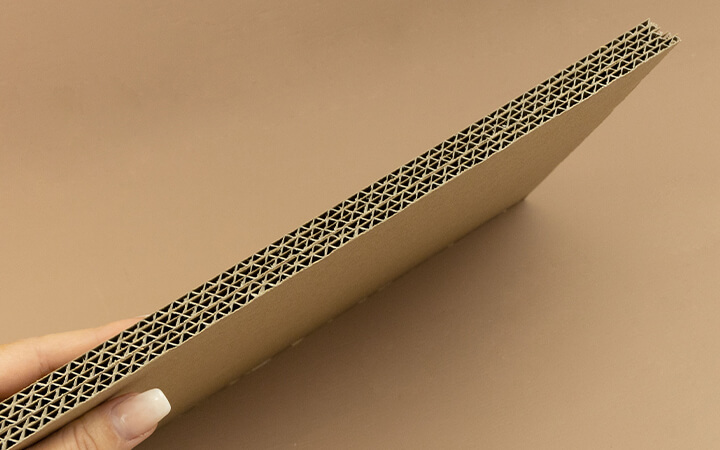
The air cushions help to absorb pressure or shock from the glass and prevent it from breaking. The cardboard becomes really resistant and stable only when the corrugation is glued on both sides with a smooth paper sheet. The resulting air cushions are now permanently woven into the material and can no longer be smoothed. This gives the material a high load-bearing capacity and stability, although it still weighs almost as much as three smooth sheets of cardboard.
The most important factors that lead to an increased bearing capacity as well as a better print image are the height of the respective corrugations as well as their distance to each other. The higher a corrugation and the greater its distance from the next corrugation, the greater the air cushion and therefore also the stability.
However, this also results in a disadvantage: a corrugated board with a larger flute separation ensures that the straight outer webs are not one hundred percent smooth due to the large air cushions.
What does not play a major role for shipping and transport, however, comes into play when printing packaging. Because in order to be able to produce a high-quality print image without dents, we need a smooth surface on which the print image is applied.
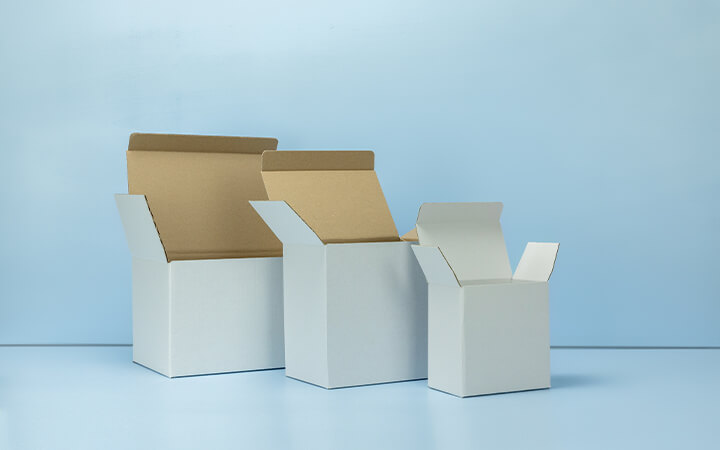
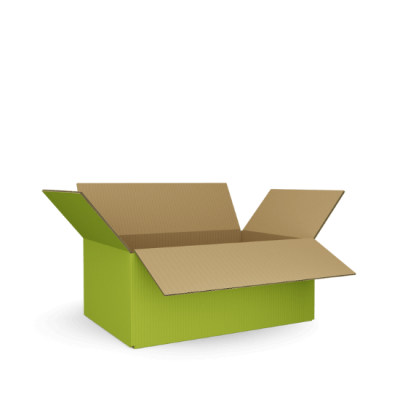
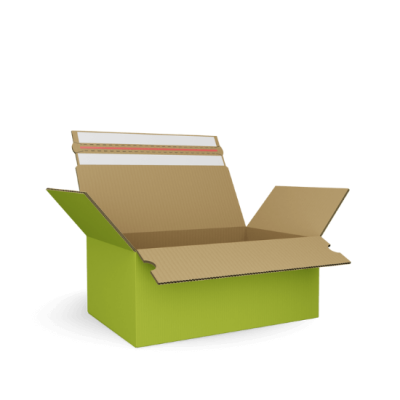
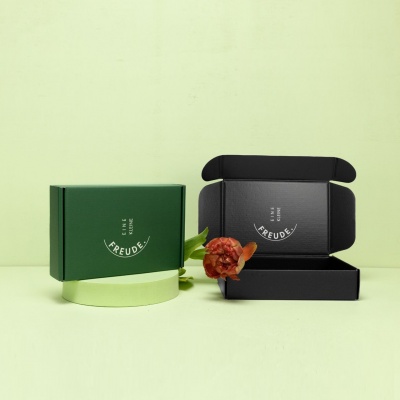
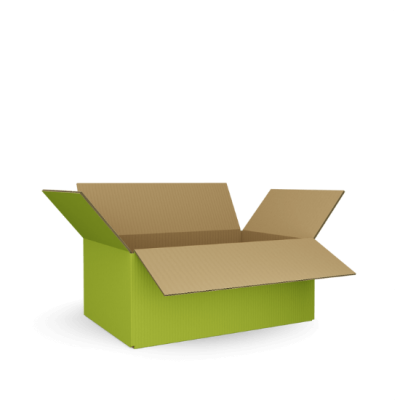
The most popular product from our corrugated cardboard range are our shipping packaging. Available in E-, B- or EB-flute, they can easily and safely transport packaged goods weighing up to 32 kilograms. The folding carton is certainly to be considered the classic in this segment. It is easy to handle and one of the most frequently used shipping cartons in the mail order business.
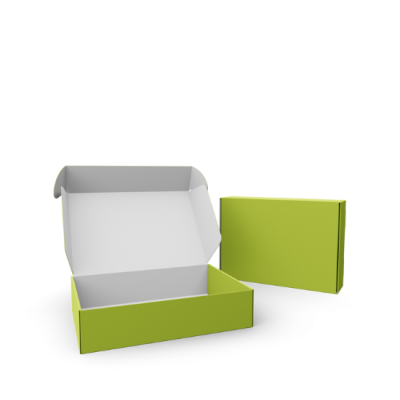
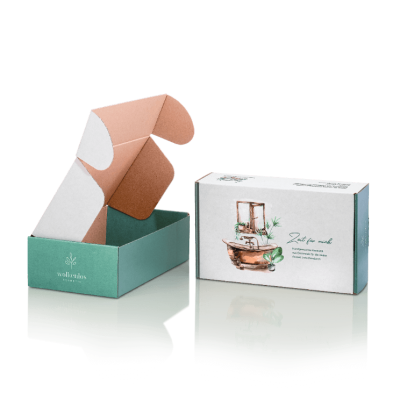
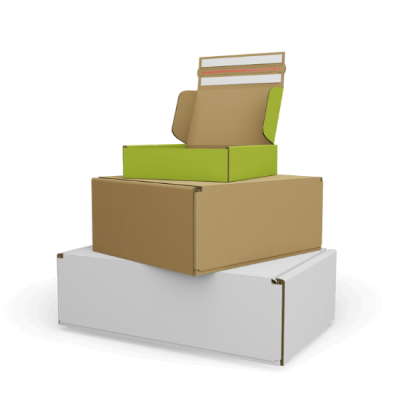
The hinged-lid box has the same properties, but has a hinged lid that opens like a chest. This has two advantages: Parcel tape is not necessarily needed to close it, and it offers customers a special unboxing experience thanks to the hinged lid, which can also be printed over its entire surface. The hinged-lid box as well as the shipping box is also available with adhesive strip. This type of product is perfect as shipping packaging for e-commerce.
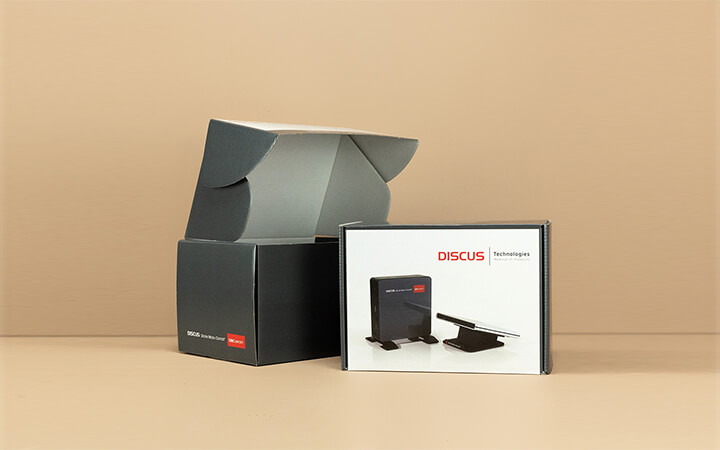
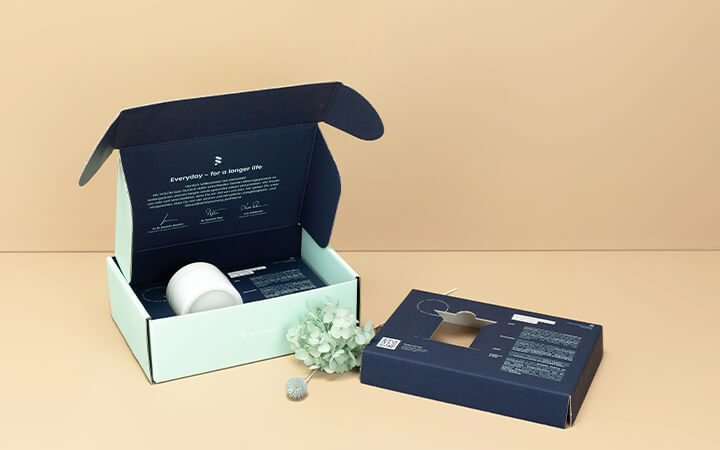
Corrugated cardboard is also used as an inlay / cardboard insert to fix packaged goods within a package or, as in the field of pharmacological products, to identify daily doses. Since the inlay can also be printed over the entire surface, there are many possibilities for design and use.
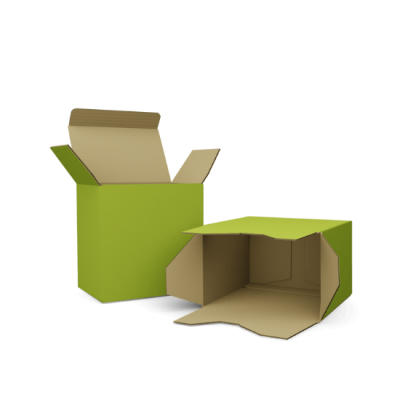
Our corrugated cardboard folding boxes are especially popular as product packaging. Due to the great demand, we have various models with different closure options in our range, such as the folding box with tuck-in flap. The lid as well as the opening are closed by folding the side and main flaps into each other. Another model is the folding box with snap lock base. The opening works like the closure with tuck-in flap, but the bottom is tucked together and offers a higher load capacity.
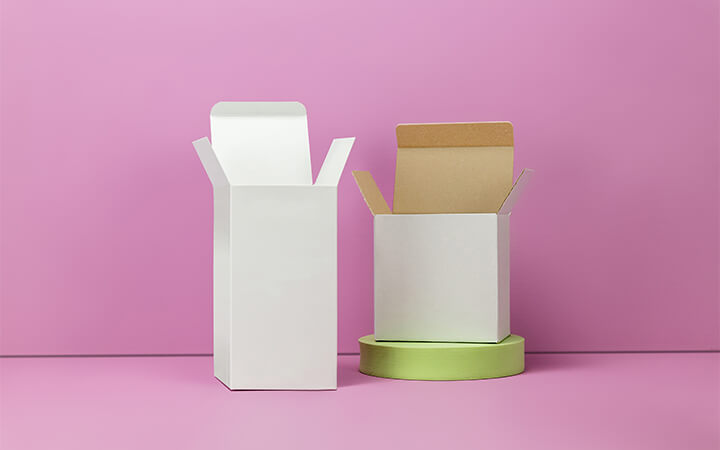
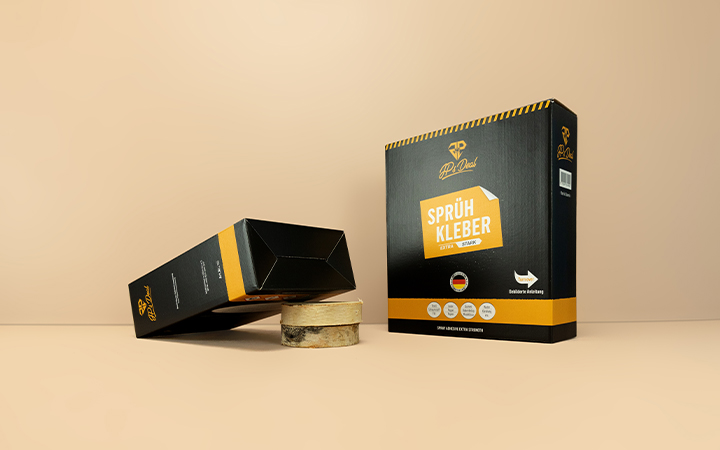
The folding box with crash lock base is particularly convenient. This is firmly glued and automatically erects so that no packaged goods can fall out. Our corrugated cardboard is also excellent for reinforcement inlay. This is used to wrap bottles or flacons, for example, to provide greater protection during transport and storage. Another similar application is corrugated cardboard as a cardboard slipcase. This is slid over the packaging and protects the packaging or serves as an advertising space for slogans, brand logo or claim.