


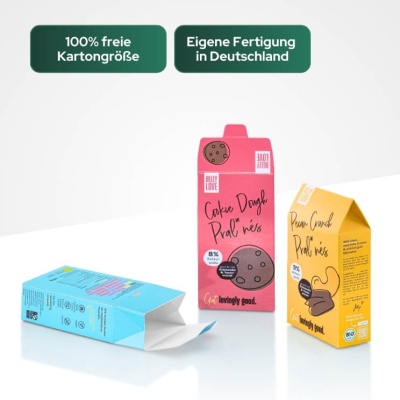
 Folding boxes
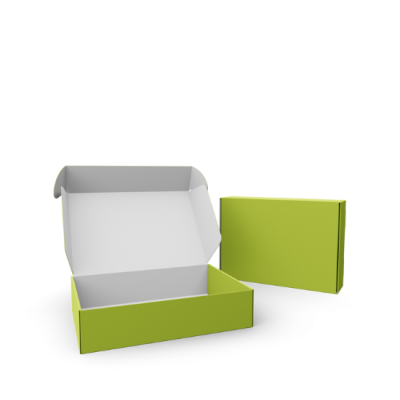
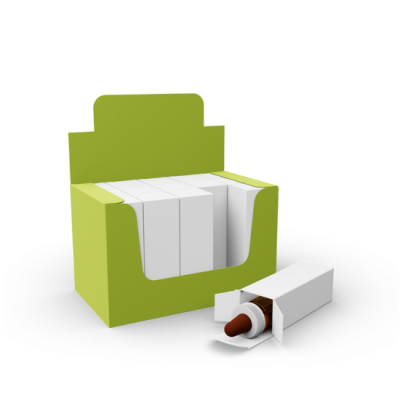
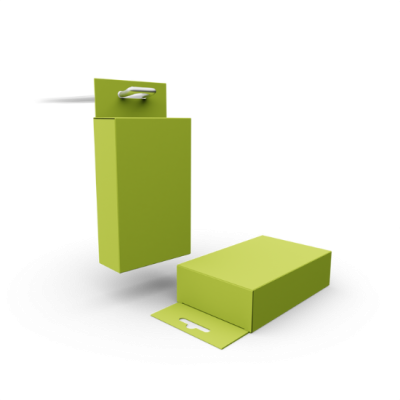

 Shipping boxes


 Stand-up pouch


.png) Labels
Labels 
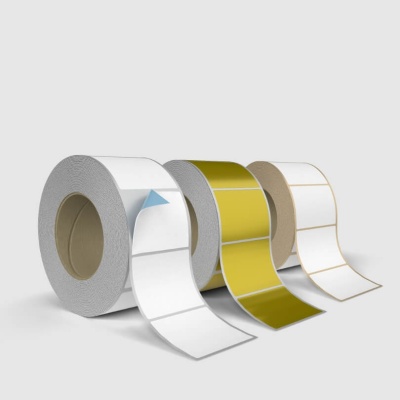
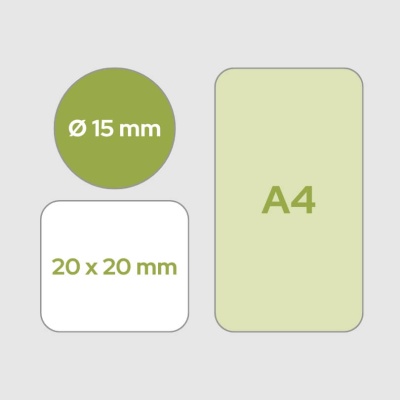
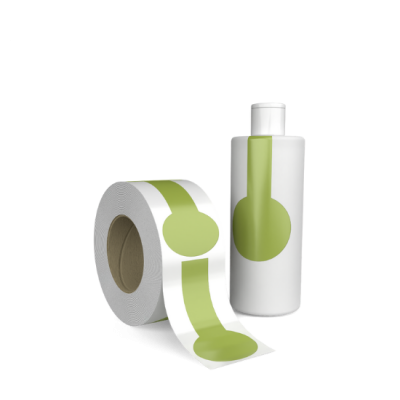

 Paper cans
  Sample boxes
 Laminating involves joining two or more webs (e.g. film to film or film to paper) to form a composite material in order to combine different properties, mechanical characteristics or visual appearances. Depending on the application, this process is carried out using either wet laminating or thermal laminating.
Wet laminating
Wet laminating is divided into a solvent-based and a solvent-free variant.
Solvent-based laminating
In solvent-based laminating, liquid adhesive is applied to the materials and the solvent is removed in the drying channel. The webs are then permanently bonded together using pressure and heat. The resulting composite then requires a curing time of approximately 12 to 24 hours before it can be further processed. Laminating machines with solvent-based adhesives require extraction for the escaping solvents. Typical production speeds range from 150 to 600 metres per minute.
Solvent-free laminating
Solvent-free laminating uses two-component adhesives (usually polyurethane-based), which means that no drying tunnel is required and no solvents escape. The required bond is created by the chemical reaction of the two adhesive components. Depending on the adhesive, the laminated composite requires between 3 and 7 days to cure before it can be further processed.
Thermal lamination
In thermal lamination, the different layers are bonded together by activating a thermoplastic layer. To do this, the coating is heated to the required temperature in the laminating machine and then bonded to the second web. The laminating process usually takes place at 80-120 metres per minute and no additional time is required for curing. The laminated composite can be processed immediately. The process is therefore particularly suitable for small to medium runs that are time-critical.