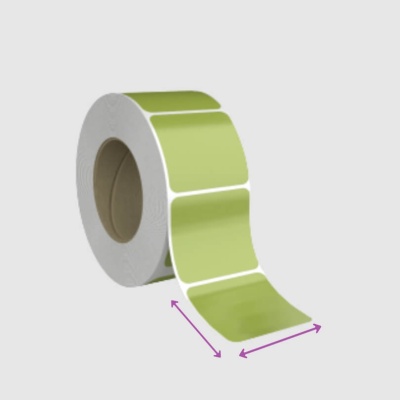
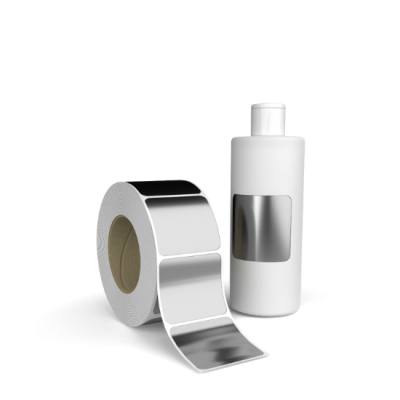
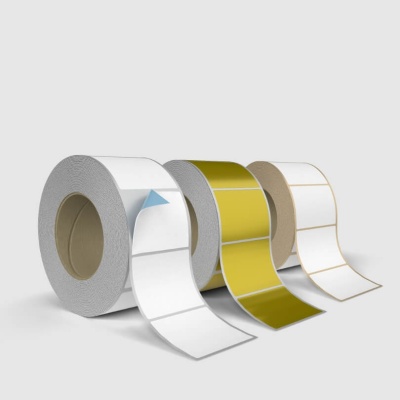
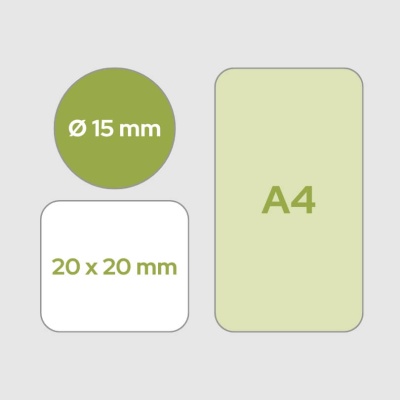
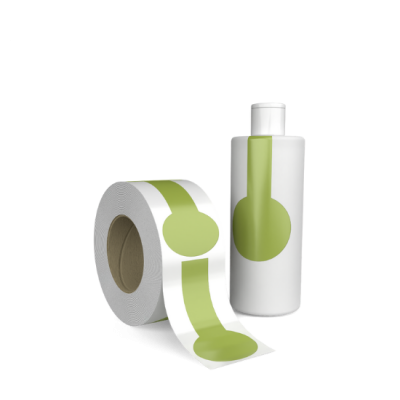
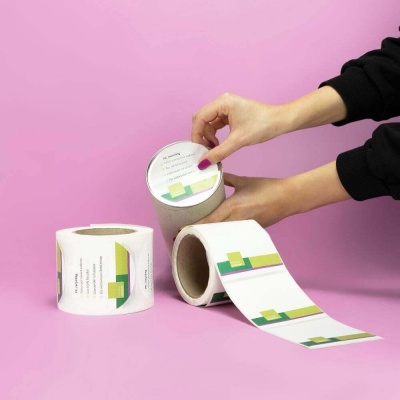
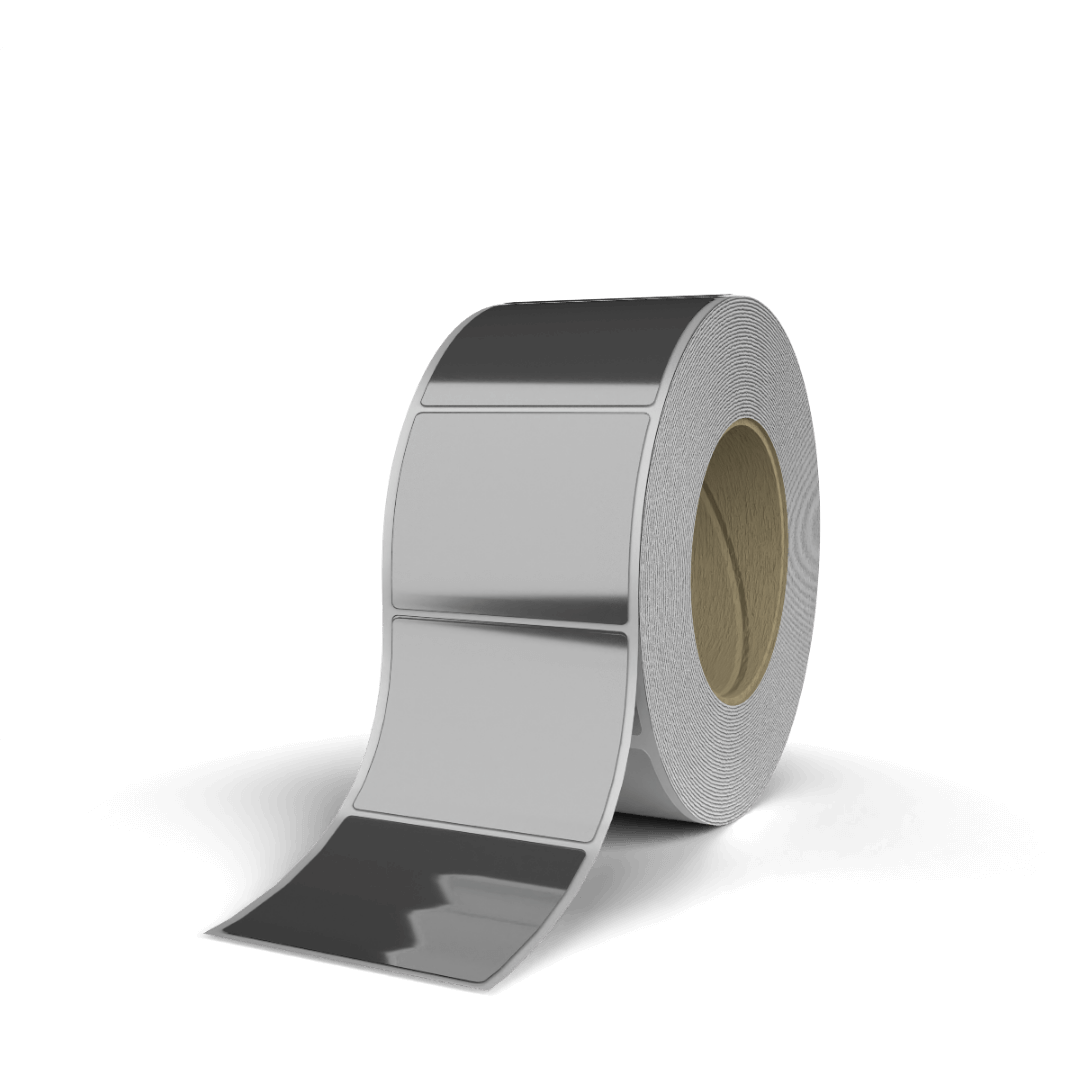
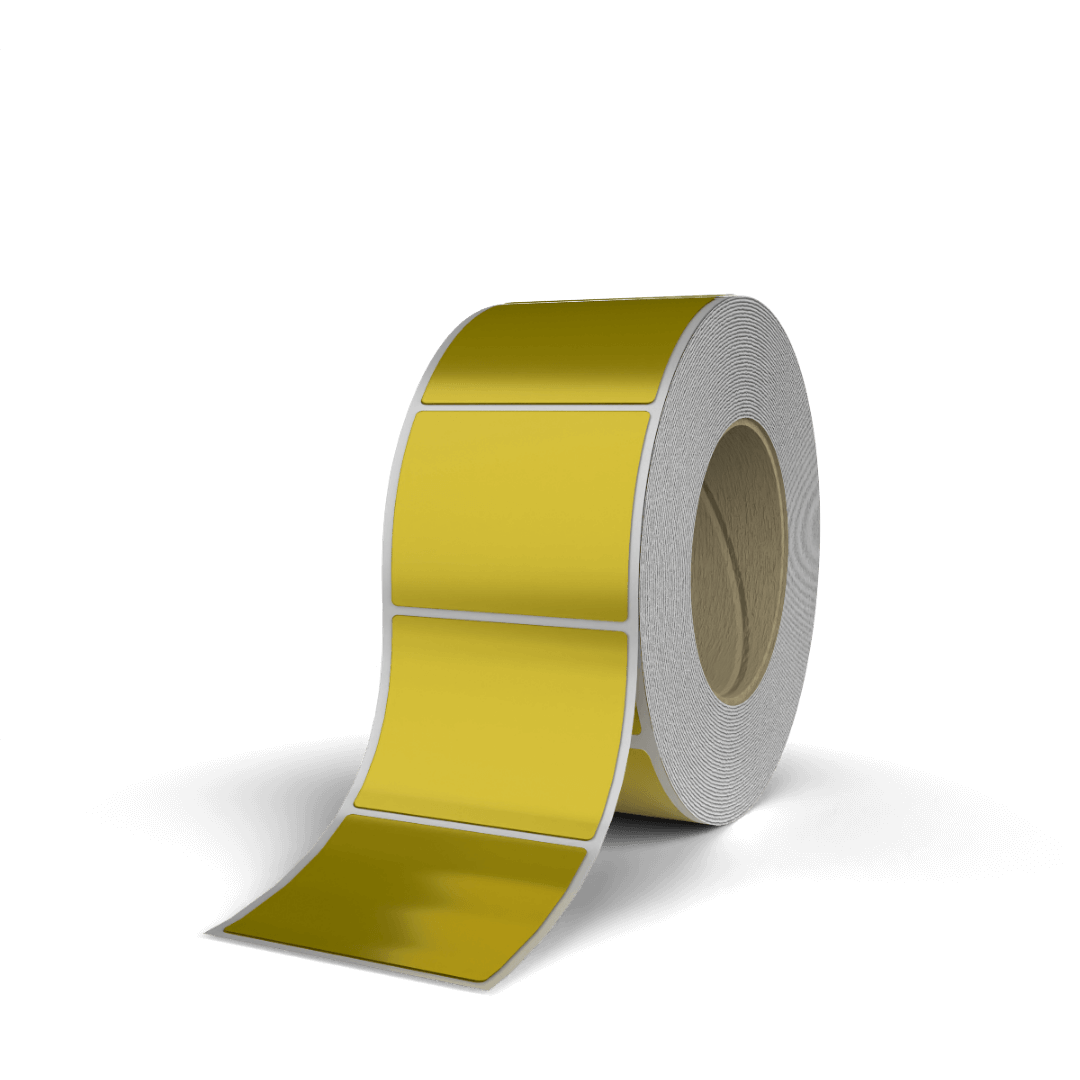
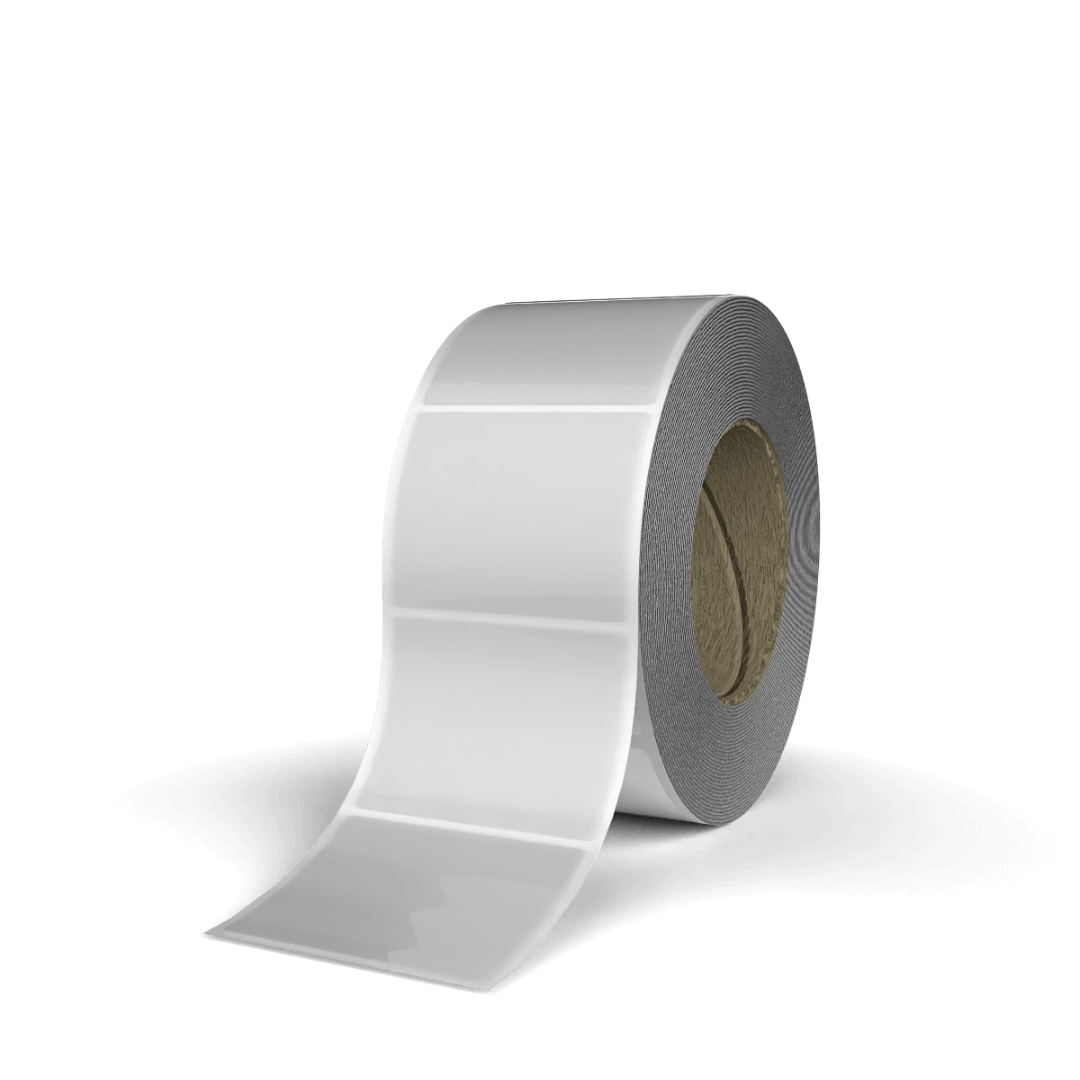
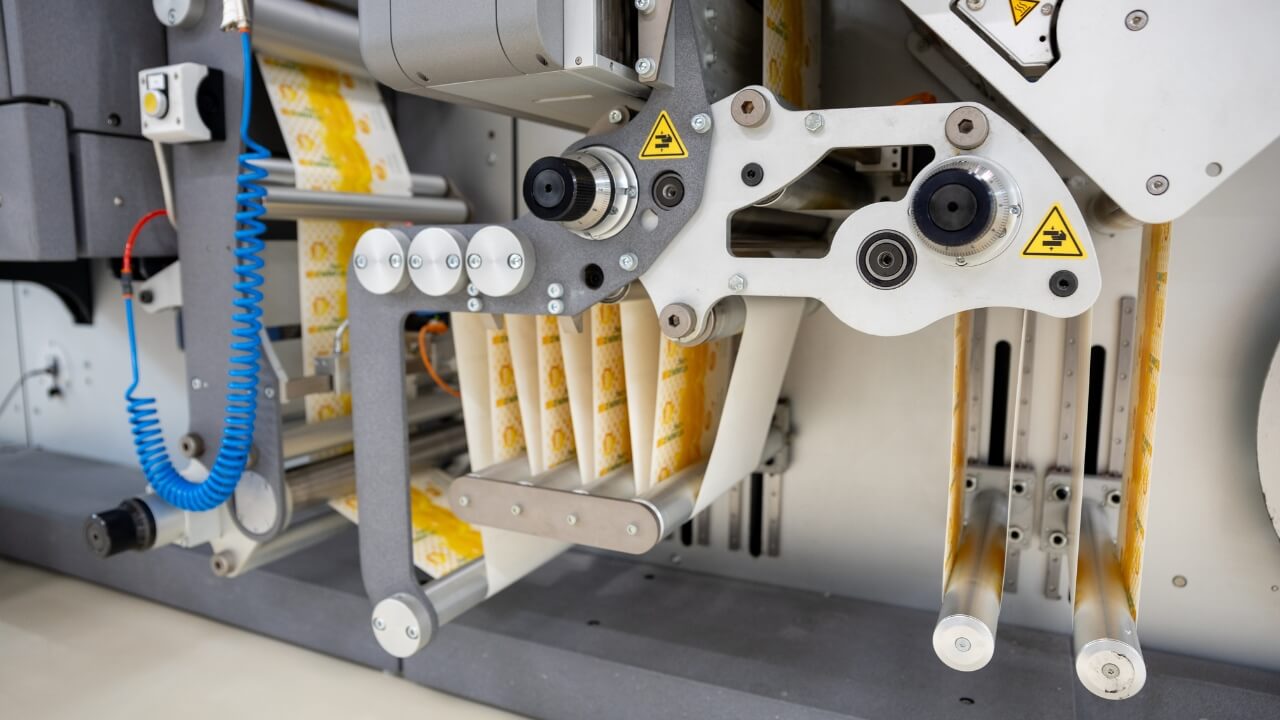
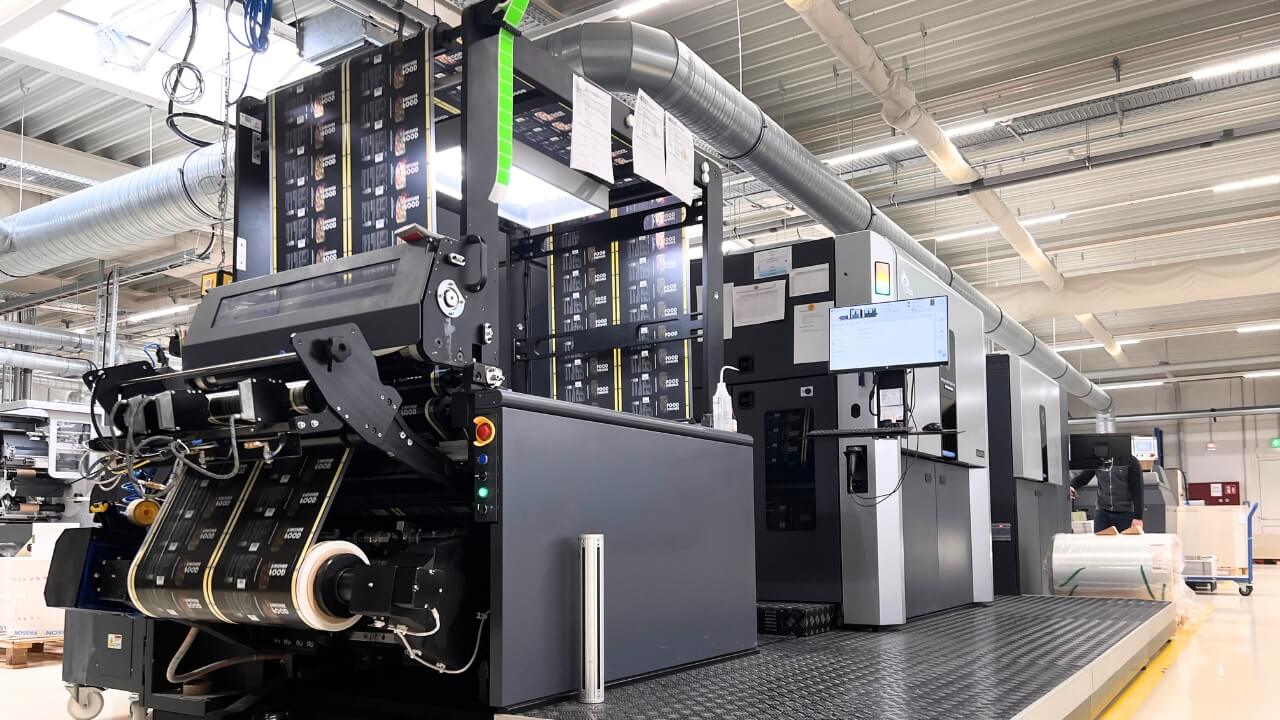
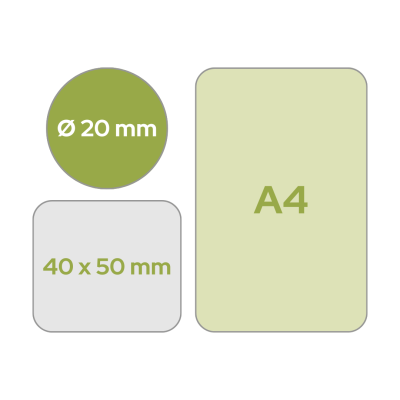
Our industrial-grade labels on rolls meet the highest standards of precision and durability. In our online configurator, you can customise the size, quantity, core diameter, coating, laminate and much more. Manufactured in Germany and HACCP and ISO 9001 certified, our labels stand for tested quality and process reliability. On request, we can deliver your order within 5 working days or by 48-hour express delivery.
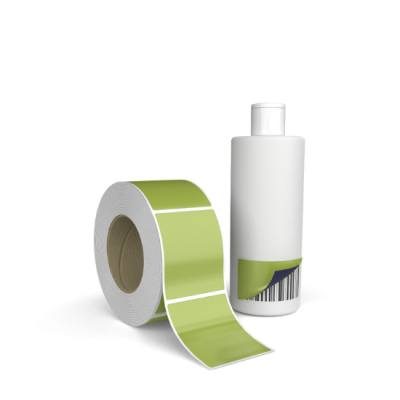
Our labels are available with protective coatings or laminates in matt, glossy or soft-touch finishes. They reliably protect the print image and give your labels a high-quality look and feel.
Adhesives
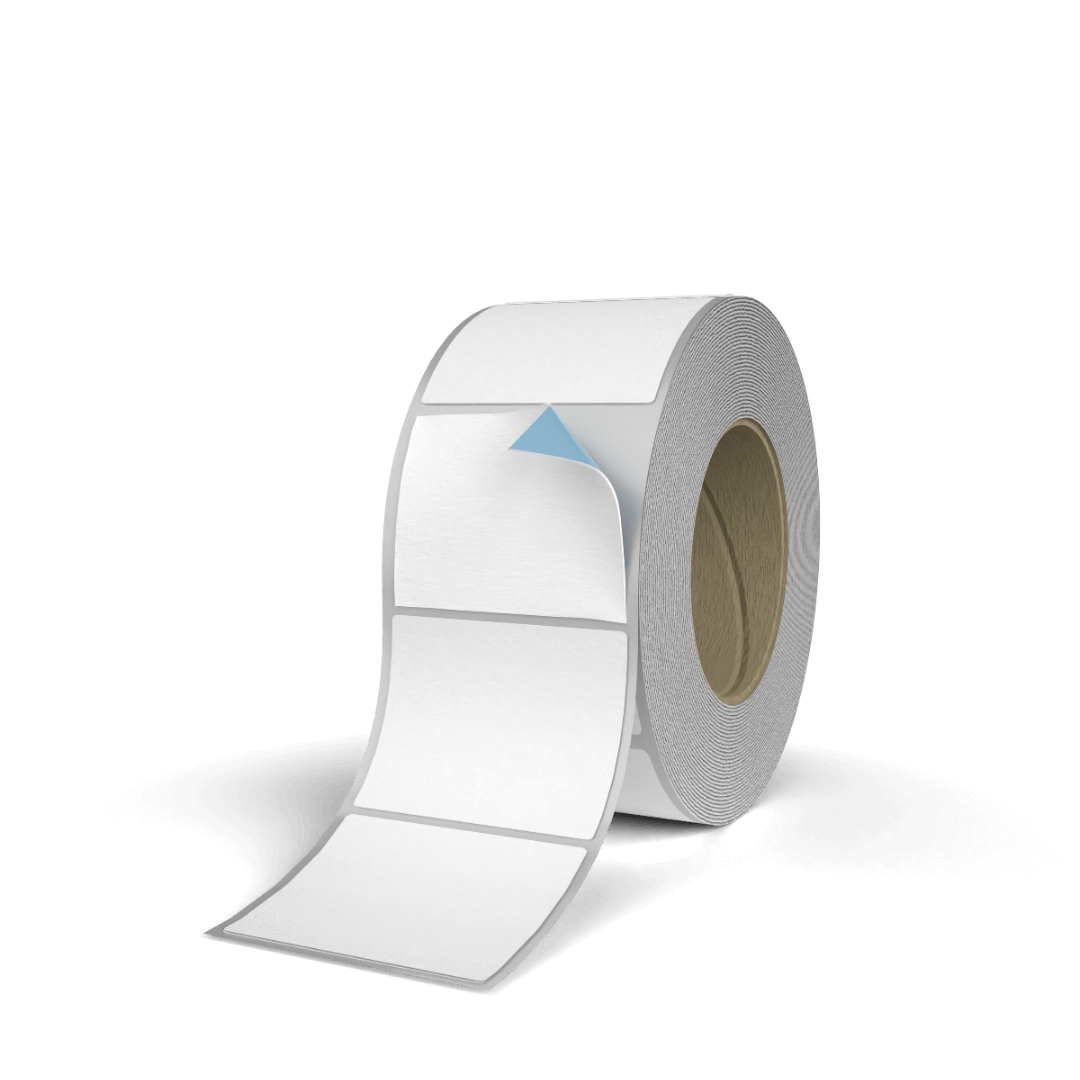
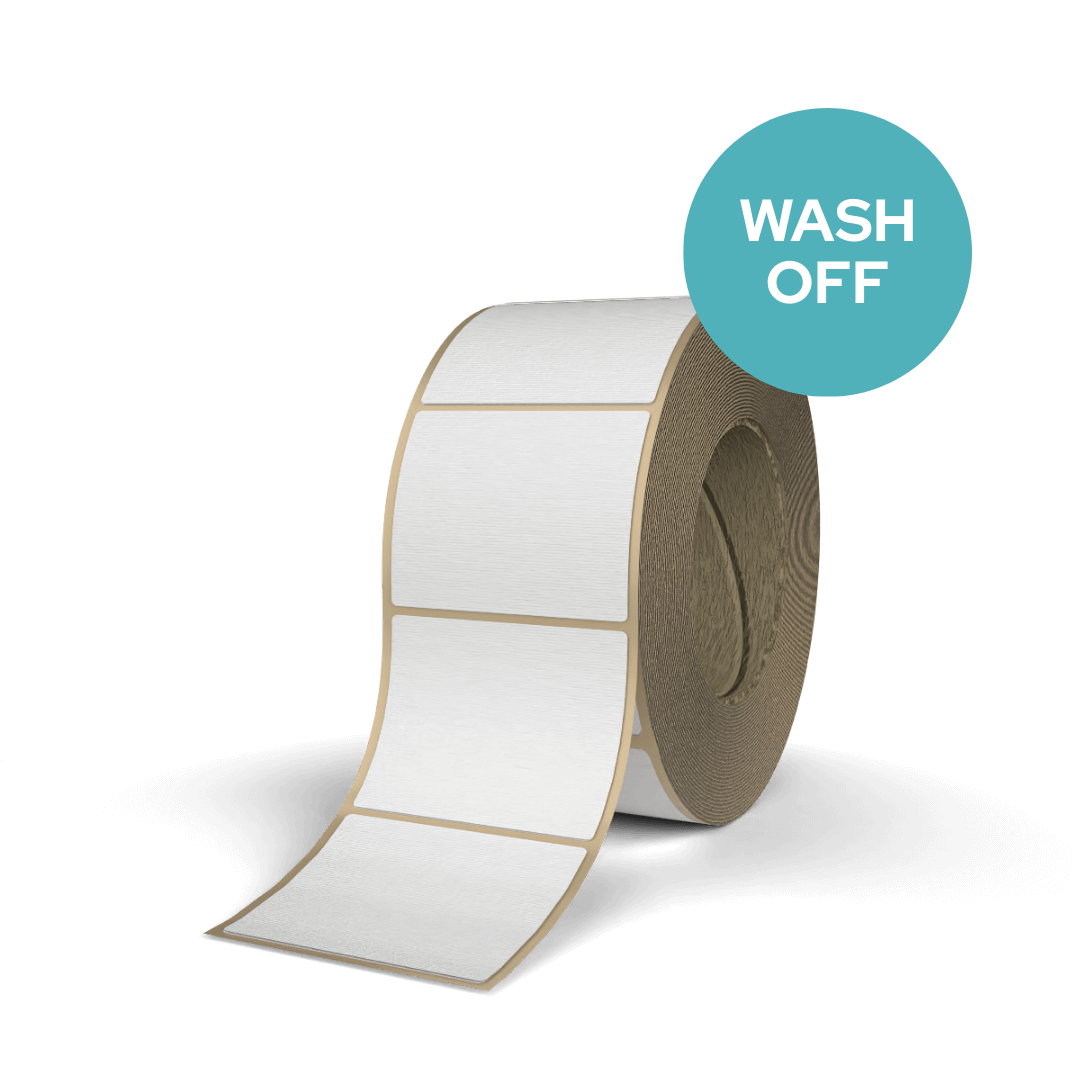
Select the right adhesive for your application – whether permanent, removable, washable or dyed-through for opaque labels. This ensures that your label sticks exactly where it should – securely and reliably.
Material selection
Our range of materials extends from PP, PE and PVC films to Paper labels. We also offer special materials for specific industrial applications that perform well even under demanding conditions.
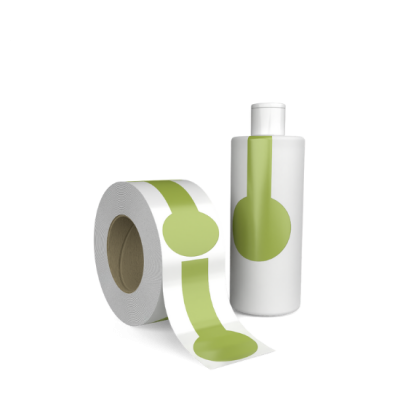
Special shapes
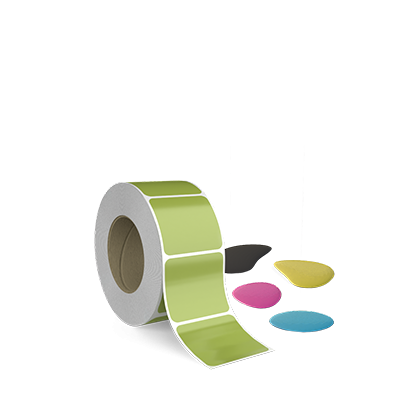
On request, we can produce labels in special shapes, such as seal, promotional or tamper-evident labels. This gives you customised label solutions that perfectly combine functionality and design.
Hot foil stamping
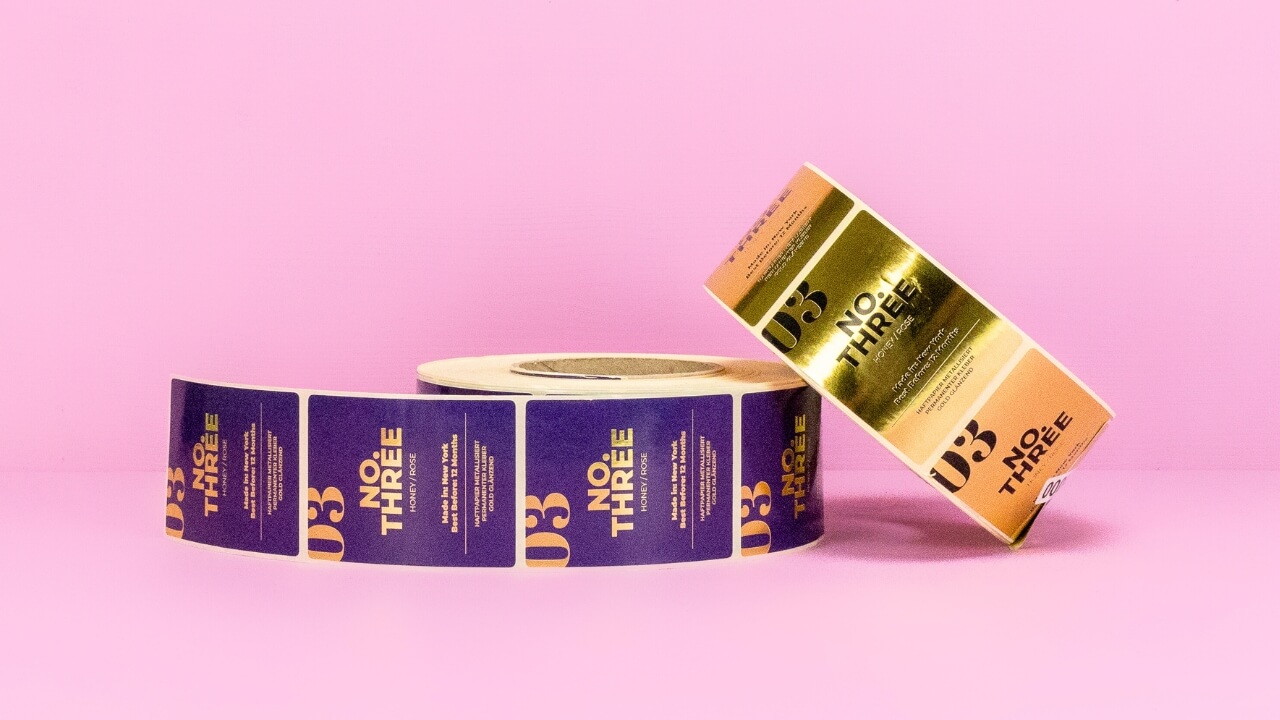
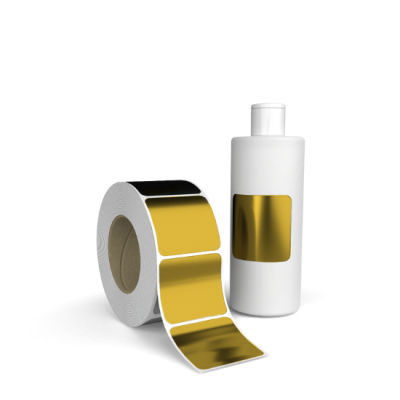
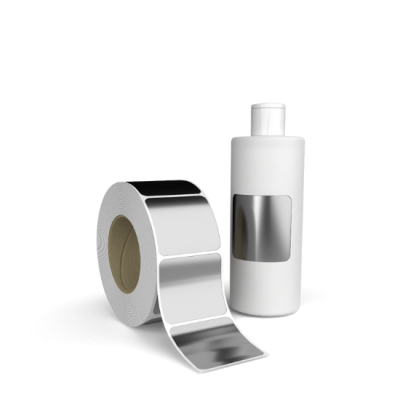
With our hot foil stamping, you can enhance your labels with exclusive metallic effects in various colours – without any tooling costs. For a sophisticated finish and maximum attention at the point of sale.
White print
We offer optional white printing for transparent, coloured or metallised materials. This ensures brilliant colours, clear contrasts and a high-quality print image – ideal for sophisticated designs.
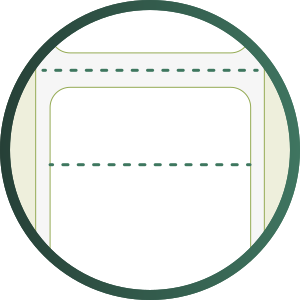
Perforations
We perforate directly on the label or on the liner – either using conventional punching dies or modern laser cutters. This gives you maximum flexibility for application and further processing.
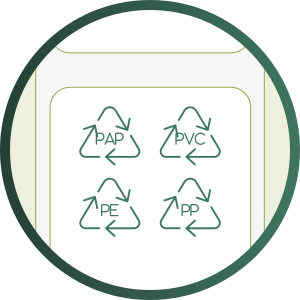
Recycling
All our PP, PE, PVC and paper materials are recyclable and PPWR-compliant. This means you can rely on future-proof label solutions that combine sustainability and quality.
Lasse Harder CEO & Labelling Specialist
Let's make your labels unique together!
Our experienced team of label professionals is always available to assist you by telephone or email. Whether you have complex projects, individual special requirements or questions about materials, adhesives or printing processes, we will provide you with personalised, competent and reliable advice. Together, we will find the optimal label solution for your product. Contact us – we look forward to your project!
Are you looking for labels that perfectly match your product? We've got you covered – whether you need small, large or sophisticated special shapes. For three generations, we have been producing high-quality label solutions in Germany, combining experience with state-of-the-art printing and manufacturing technology. You get quality you can rely on and a team that thinks ahead. Together, we turn your idea into the perfect label – precise, durable and distinctive.
We would be delighted if you could send us a message and give us an insight into your requirements. The more specific your information is, the better we can advise you and suggest a suitable solution.
We will get back to you as soon as possible!
Labels directly FROM THE MANUFACTURER
Your partner for customised labels on rolls
Labels Made in Germany
We focus on regionality and precision. That is why we produce your labels in the heart of Germany – using state-of-the-art printing technology and the highest quality control standards.
Sustainable materials
Our labels are made from recyclable paper or plastic materials that are manufactured in a CO₂-saving manner and are environmentally friendly and recyclable in accordance with PPWR guidelines.
Personal contact person
You will always have a dedicated contact person who will advise you personally and accompany you from your initial enquiry to the delivery of your labels.
Labels – also known as stickers – are self-adhesive information carriers that can be printed with a variety of information and designs. Made from paper or film, labels are used in almost every industry and reliably fulfil their purpose as
Shipping label
Address label
Stickers for advertising
Barcode label
Product label
Food label
and are also used to label stock, cable reels or production machinery. The multi-layer stickers not only impress with their information – at packaging warehouse, you can have your individual design printed on the label and choose from many different materials and shapes.
Labels – stickers with many uses!
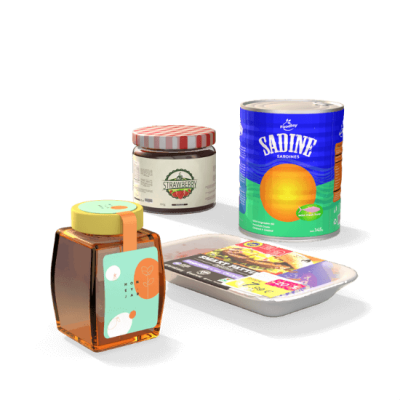
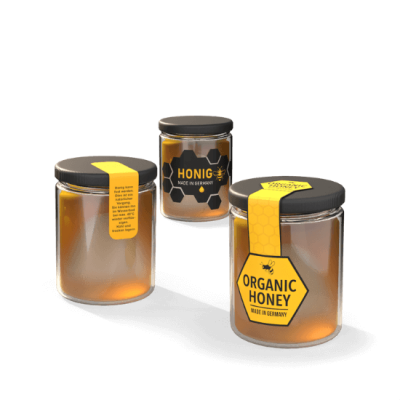
Labels serve many different purposes: they display prices on retail products, provide information about the ingredients in pharmaceutical products and indicate the best-before date on food items.
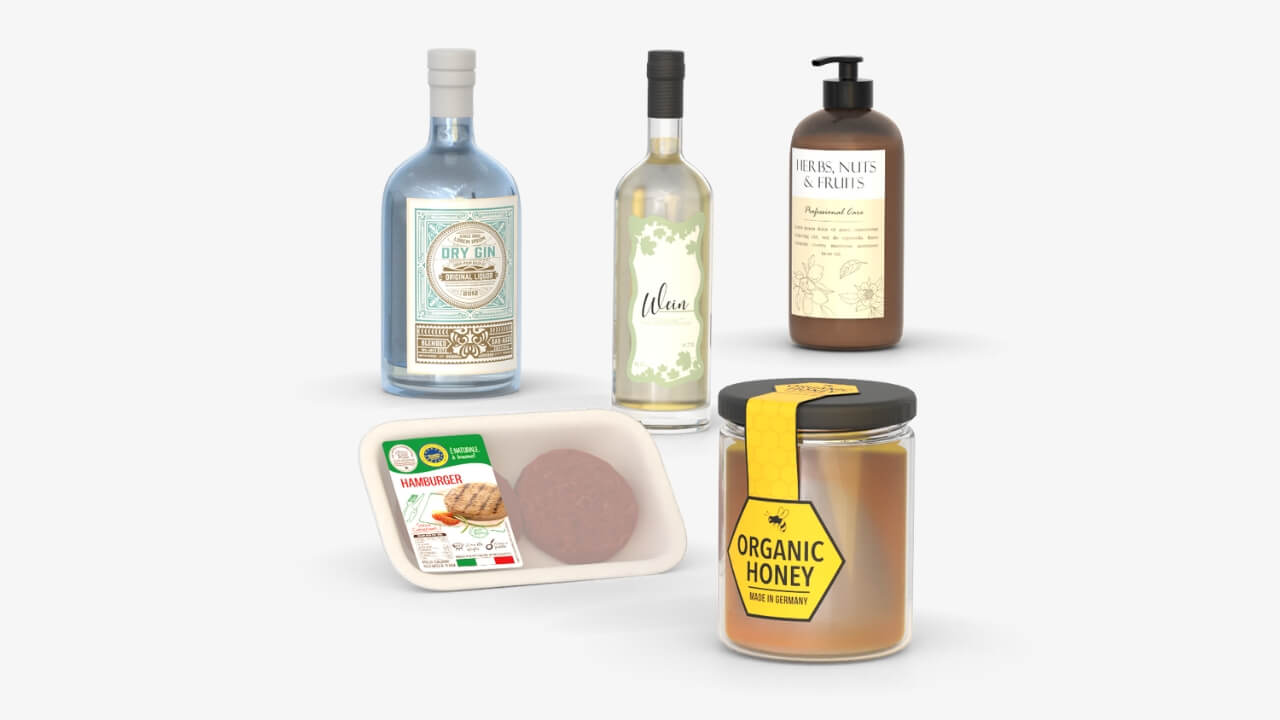
Without address and warehouse labels, shipping and transporting goods would be nearly impossible, and without blank labels for self-labelling, there would be no order in the office. Tastefully designed labels decorate beverage bottles, food items and cosmetics for effective advertising and also benefit from their specific properties here:
Matt or glossy surfaces
removable or permanent adhesive
Indoor and outdoor use
suitable for food and frozen food packaging
moisture-, abrasion- or scratch-resistant
UV, heat or chemical resistant
Certain materials give labels the properties that qualify them for their respective purposes and provide them with the necessary resistance to external influences.
How we print your labels depends on the surface to be labelled and the special function to be fulfilled. Through the targeted selection of materials, coatings and suitable adhesives, labels from packaging warehouse can withstand, for example:
extreme temperatures
dirt
fat
salty sea water
ultraviolet radiation
acids
lye
solvents
The structure of adhesive labels
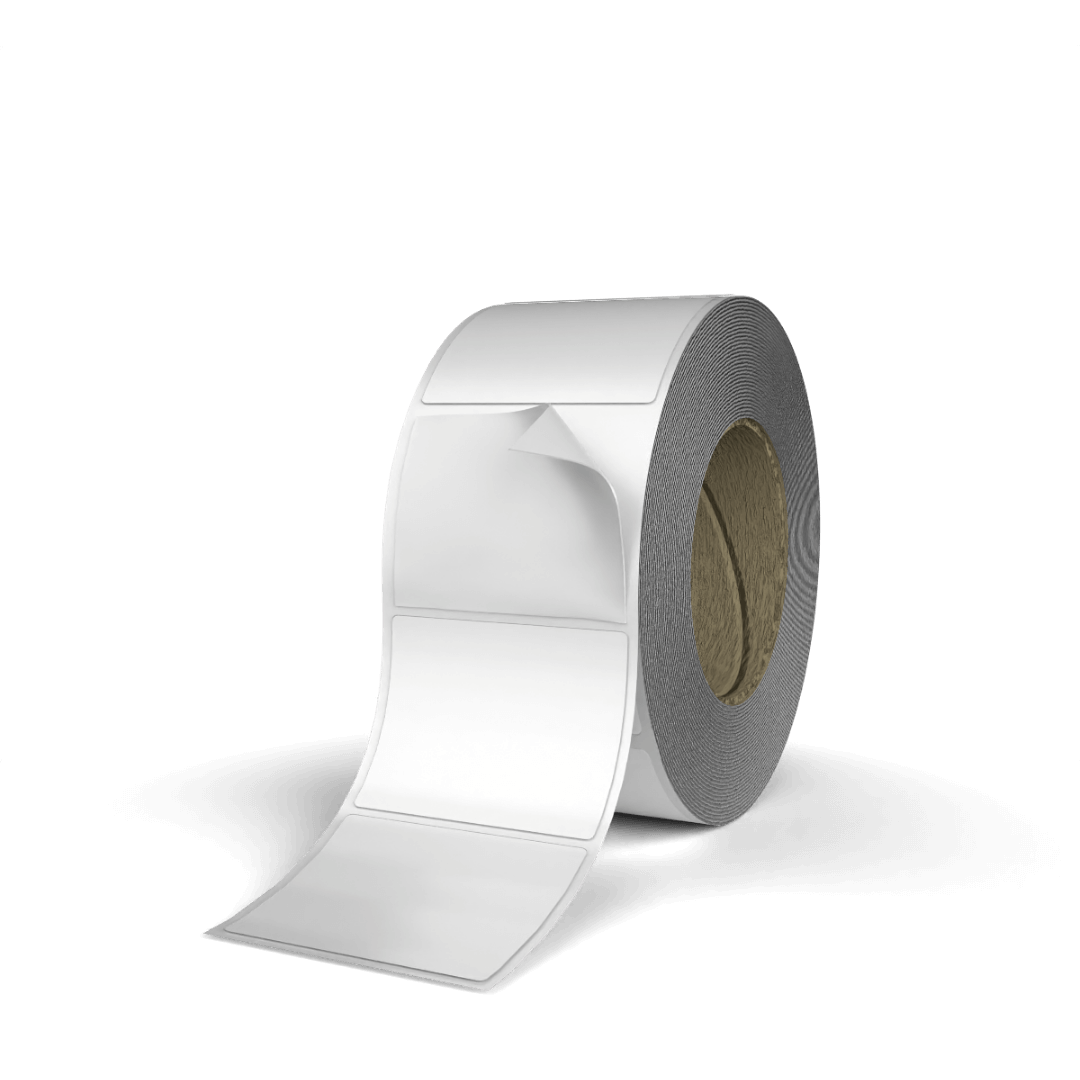
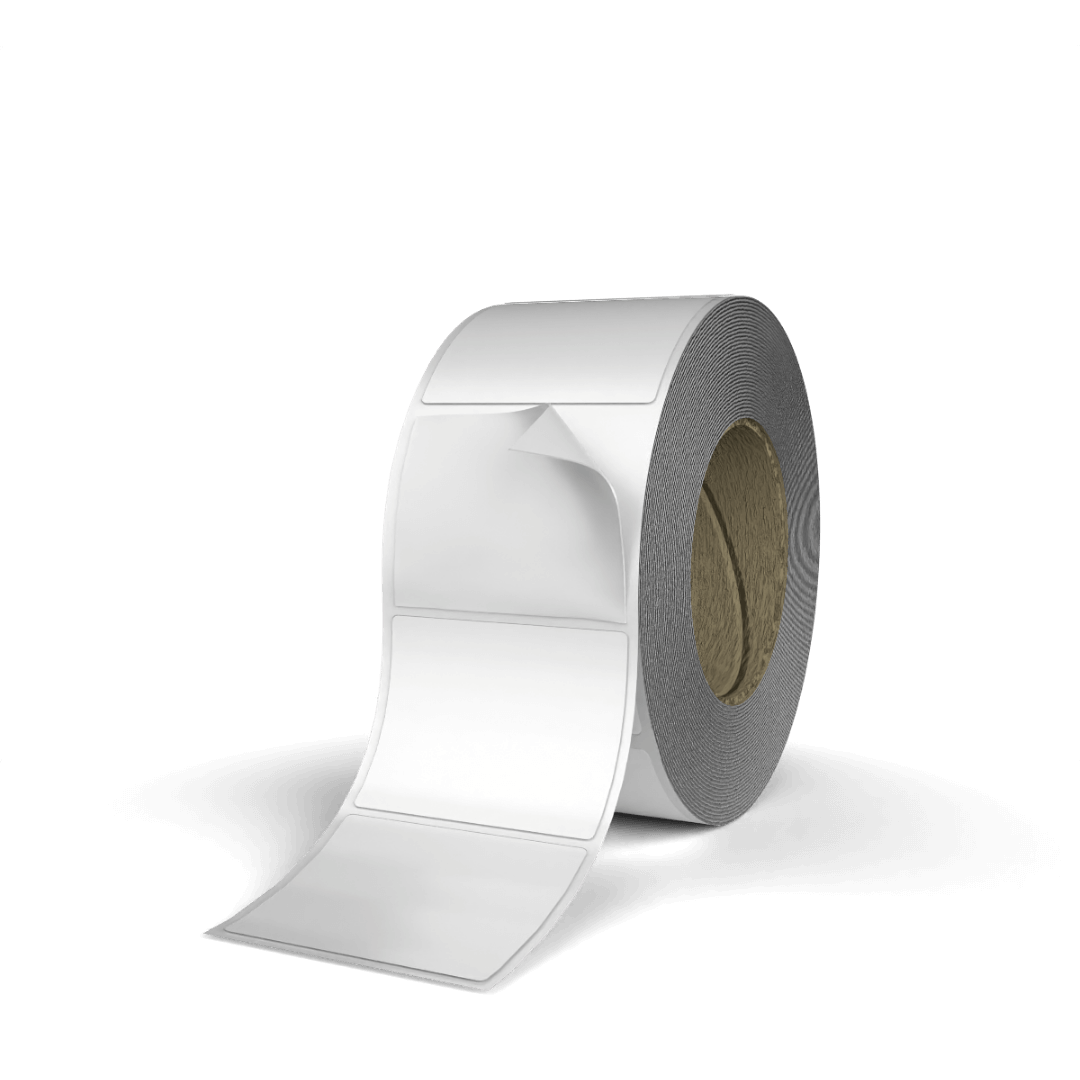
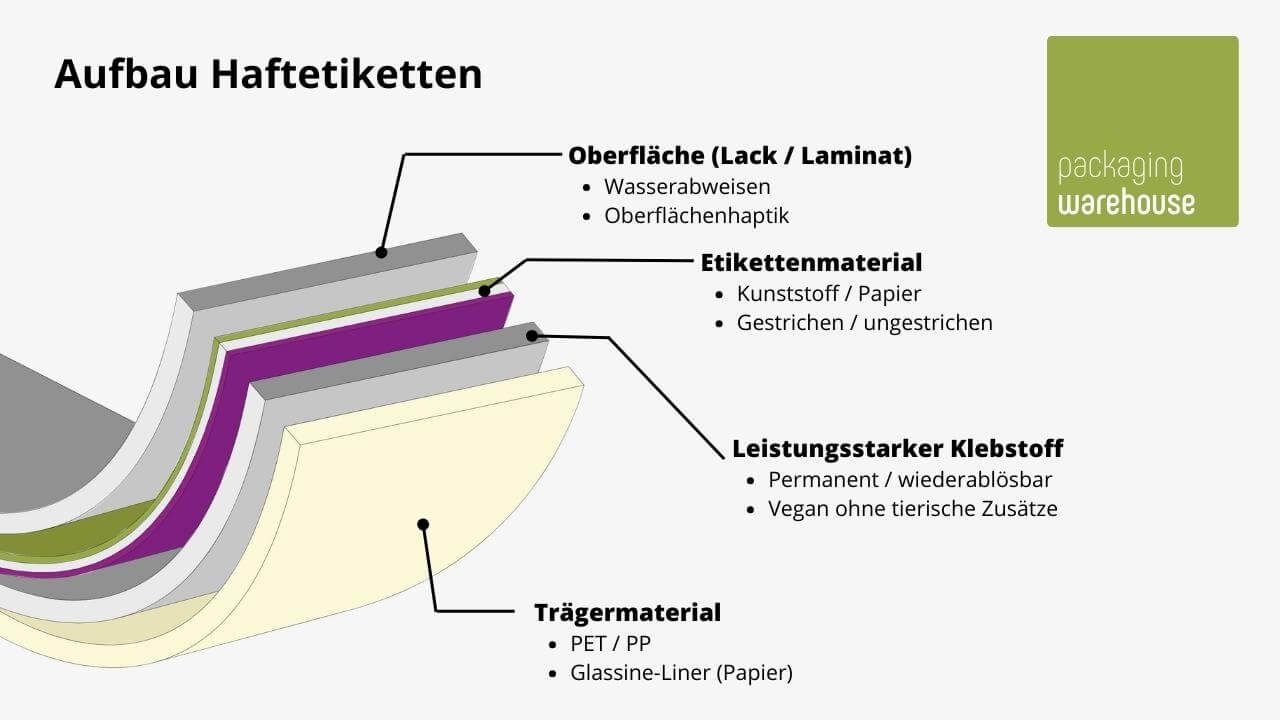
Adhesive labels consist of a three-layer composite material – the top layer made of paper or film, an adhesive and the backing material, also known as the liner. The top layer is selected depending on the intended use and can also be coated with a protective varnish or laminate. The adhesive layer ensures that the label adheres securely to a surface.
Here, too, the area of application determines the type of adhesive used – acrylic or rubber-based adhesives are primarily used for labels. The backing material ensures that the labels and adhesive are securely protected until final application – without unwanted sticking. Liners made of PET and PP films also contain a silicone release layer that prevents the sticker from sticking to the backing. This allows the printed or blank roll labels to be easily removed. The same applies to glassine liners, which are made of supercalendered paper and, thanks to their high degree of compaction, offer a perfect surface for a thin and even silicone layer.
The term etiquette, which originates from the French word estiquier, meaning “to pin down”, originally referred to discreet labels with rules of conduct and behaviour for guests at the king's court. Around 1700, they informed courtiers about what to do and what not to do during ceremonies.
What functions do labels fulfil?
Labels are used to identify products, transport goods and packaging, and as a source of information for consumers. Among other things, they provide information about the contents of many different goods, including details of ingredients and intended use. In some cases, product information is also provided on the label in the form of a barcode or QR code. But the stickers also convey warnings or, as Security labels, seal exclusive goods against unauthorised opening.
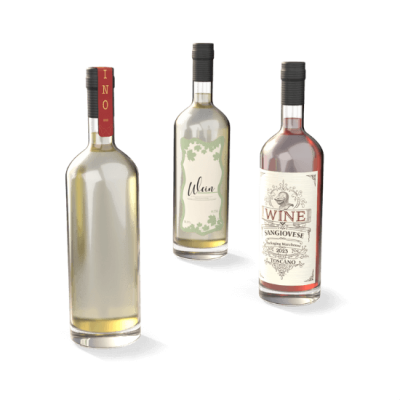
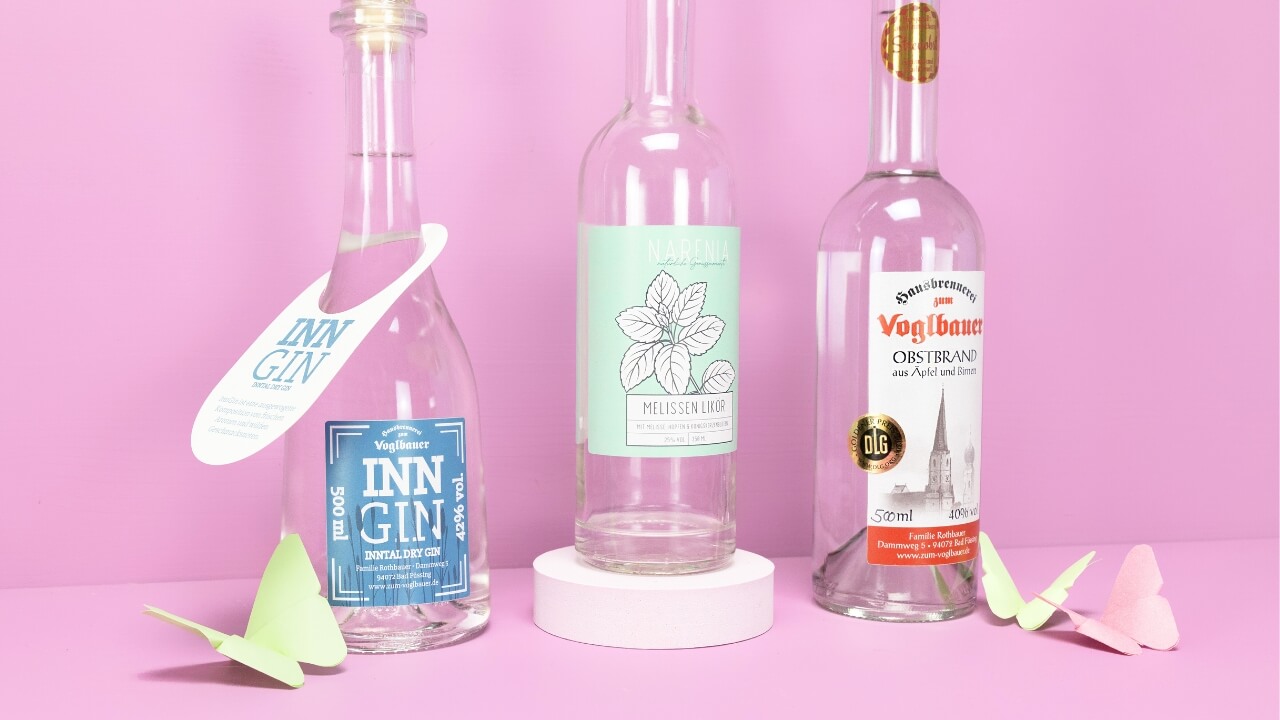
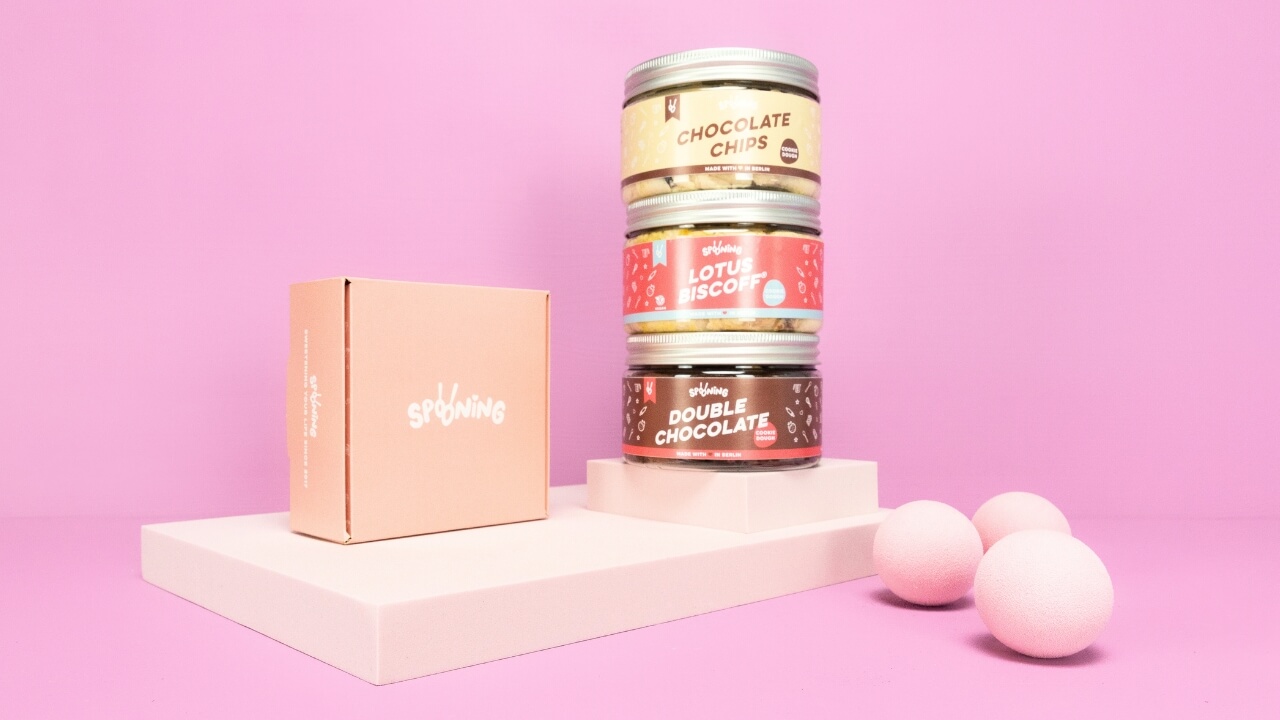
Labels do more than just identify products – they also play an important role in product presentation at the point of sale or in online retail. The range of different label types extends from simple advertising stickers and tastefully designed product labels to elaborately finished labels for luxury items such as perfumes or spirits. Special labels such as booklet and sandwich labels are suitable for promotional campaigns such as competitions and replace the package insert for pharmaceutical products.
The tasks performed by labels are as varied as the products they identify – at packaging warehouse, you will find the right label for your product!
Marketing and branding with labels – increasing sales opportunities
In addition to the classic function of labels – providing clearly visible information about the product – the label design also conveys the brand message. Colours, symbols, logos and the overall design of the stickers not only highlight the product information, but also promote identification with a brand. At packaging warehouse, you can have printed labels that stand for successful brand communication and high recognition value. For more information on marketing, we recommend our article on brand boosting: Labels in marketing.
Branding is also essential for successful marketing: different products, sales and communication channels, and target groups often require the adaptation of familiar visual elements of your products. With labels from packaging warehouse, this is an easy task – they are designed for a wide range of applications and can have a big impact on brand branding. They can be used almost anywhere and adapted to a brand and product down to the smallest detail.
When designing your labels, you should ensure that the design is consistent and complies with your corporate identity – this includes using the same colour scheme for all packaging and products. Special materials and finishes can be used to achieve a high-quality feel.
In our article on branding with labels, you can also find out why it is important to incorporate current trends and popular designs into your branding in order to maintain the recognition value of your brand in the long term.
Labels convey a wealth of information about products and companies. Labels on rolls are used in several sectors of product labelling and provide information about:
Ingredients
Nutritional values
Batch numbers
Instructions for use
as well as lots of other information that is often directly related to the product or its use. For example, a label for hazardous substances must meet different criteria than Bottle labels or Labels for frozen goods.
Legal regulations and the respective industry standard serve as guidelines. In retail, direct thermal labels and thermal transfer labels provide up-to-date information on product prices, which can be printed directly in the supermarket using QR or barcodes.
Virtually every product and every outer packaging requires labelling – for transparency, traceability, goods organisation and consumer protection. Depending on the industry, labels contain mandatory (and also voluntary) information on
Weight
Allergens
Origin
Shelf life
Handling
Warning notices
Shipping is also difficult to manage without labels, as labels simplify the logistical planning and control of goods flows, from shelf labelling in the warehouse to shipping and transport. Automated barcodes enable precise, rapid scanning of goods, while transport labels provide information on item numbers, batches and production dates.
To find the best label for your products, it is of course important that you find the label printer that best suits your needs. You should consider these 5 criteria when choosing your label printer.
The legal requirements for product labelling
In addition to functional and representative tasks, labels must also comply with the relevant labelling requirements. In the EU, product labelling requirements are enshrined in law through a large number of individual regulations and serve, among other things, product liability, quality control and consumer protection. The manufacturer is responsible for this – importers of goods, i.e. distributors from non-EU countries, are treated as manufacturers by law.
Retailers, on the other hand, are not permitted to label products on their own authority, but may only create price labels and labels relevant to advertising (special offers, etc.).
The most important legal regulations include:
Food Information Regulation
Product Safety Act (ProdSG)
EMC Act (CE Directive on electromagnetic compatibility)
Textile Labelling Regulation
Cosmetics Regulation
Medical Devices Act
In addition, labels must comply with legal requirements regarding hygiene and temperature properties, weather protection and industry-specific special requirements. When labelling food products, for example, the REACH Regulation (Registration, Evaluation, Authorisation of Chemicals) or the LMIV Act (EU Food Information Regulation) must be observed.
What types of labels are there?
Not all labels are the same – in addition to the broad distinction between paper and film labels, there are a variety of label types that are suitable for specific tasks due to their design, material combination and shape. Which label variant is ultimately used depends primarily on the print run and the intended use. Labels are not just simple stickers for product identification in supermarkets, but also serve as important information carriers for food, medicines and cosmetic products in the form of multi-layer labels.
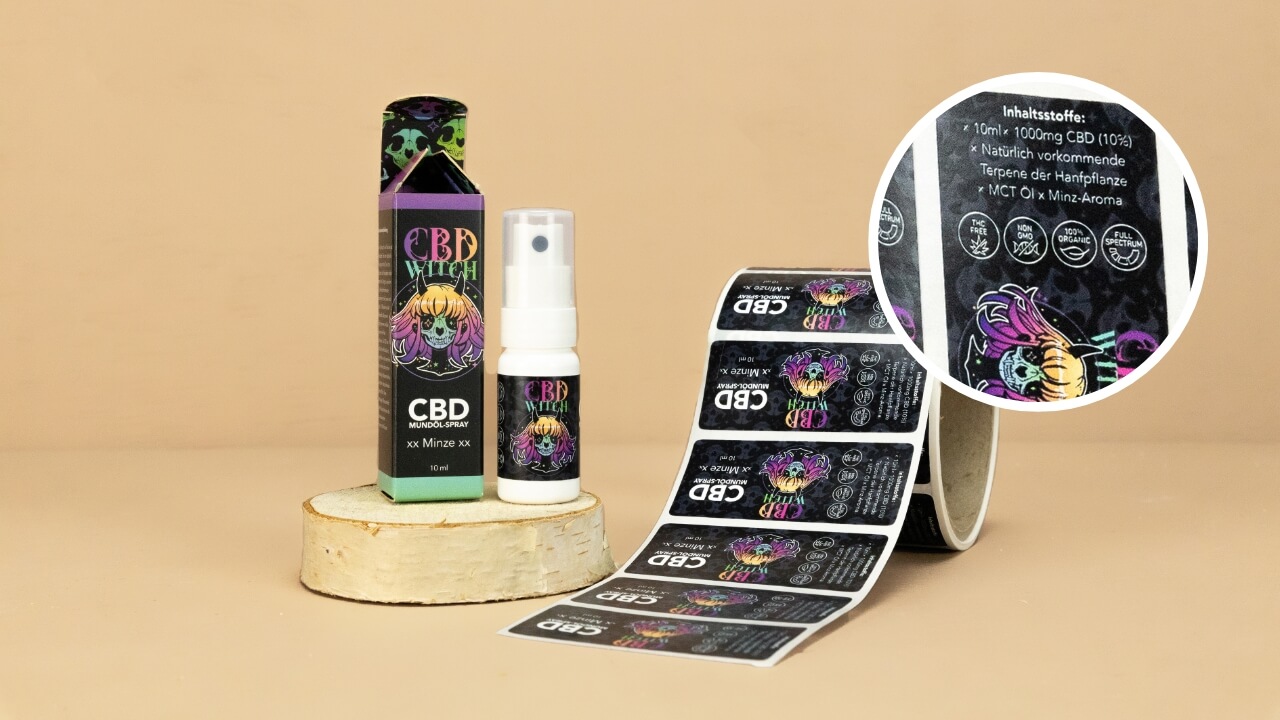
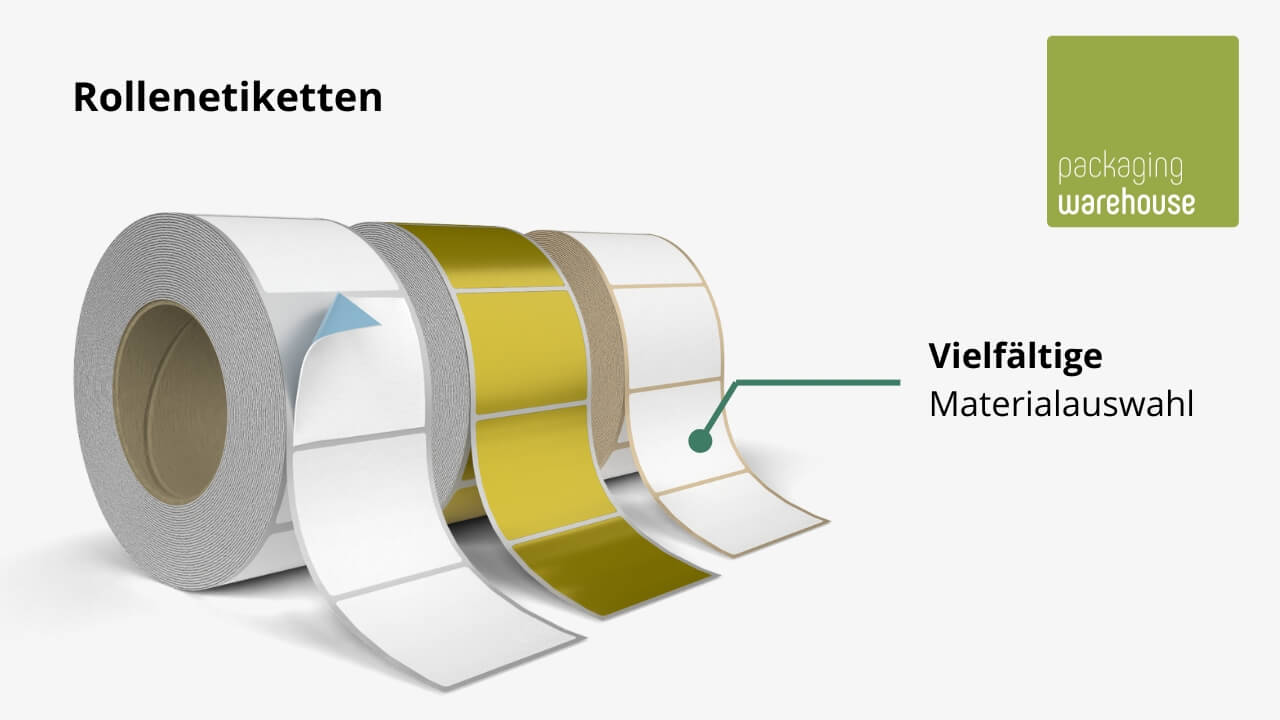
Roll labels
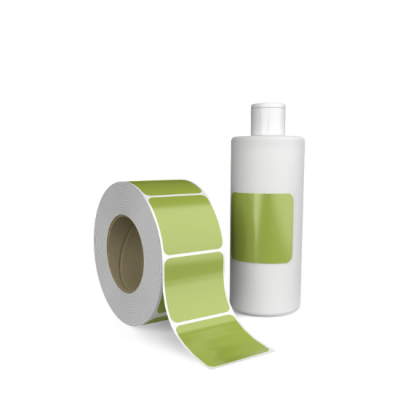
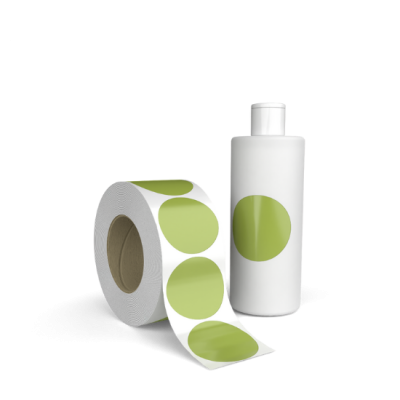
Roll labels are universally applicable stickers and, thanks to their flexible formats, are suitable for almost all applications. The self-adhesive paper and film materials can be easily applied by machine or by hand thanks to their roll form. Roll labels are suitable for many areas of application and can be found in almost all industries.
Roll cores with a diameter of 76 mm
Round, square or free format
Thermal transfer printable
Ideal as labels for shipping, transport, trade, etc.
With more than 15 years of comprehensive expertise in label printing, we are the specialists who can meet even the most demanding requirements. Whether it's small print runs that need to be produced in record time (1-2 days) or highly complex orders with special materials, special colours and high-quality finishes such as hot foil stamping or warning triangles, our modern printing and finishing technologies make us one of the leading label printers in Europe. If you also require a customised label product, please do not hesitate to contact me.
Lasse Harder CEO pack-on GmbH
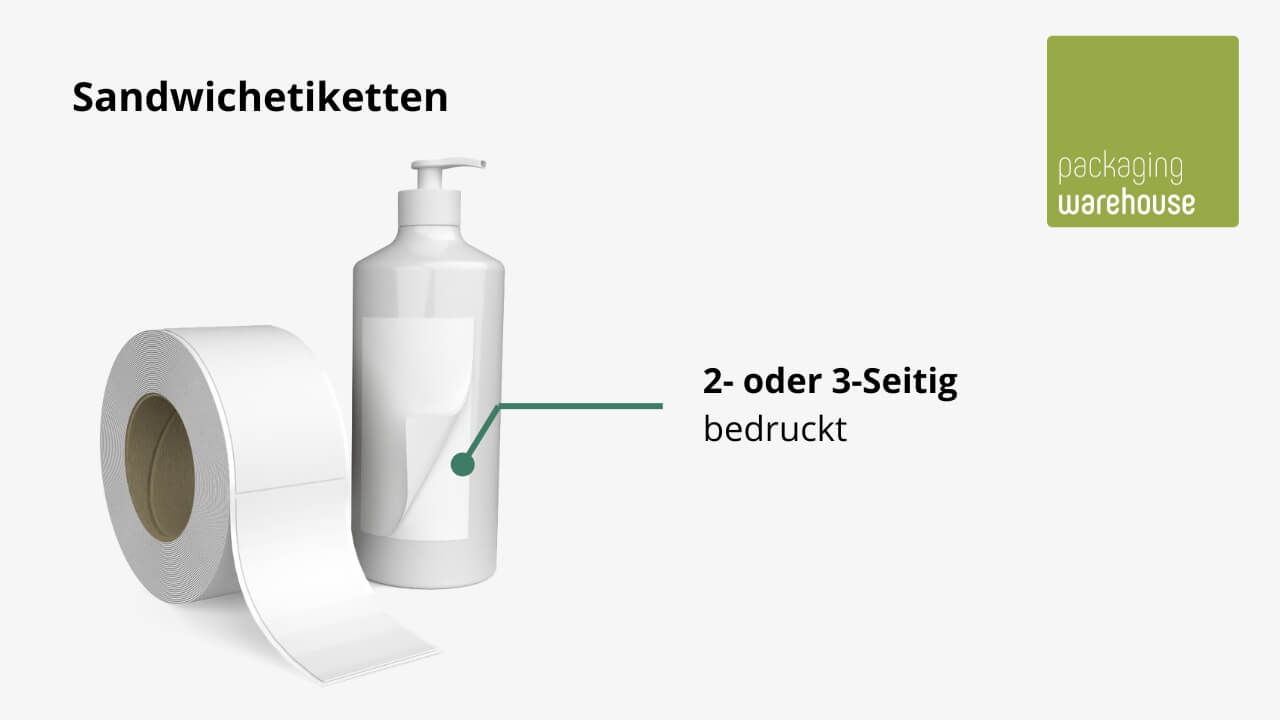
Sandwich labels
In times of increasing information requirements, rising cost pressure and the trend towards sustainable packaging material savings, sandwich labels are an economical and environmentally conscious solution. The labels consist of removable layers that are arranged in layers and connected to each other as peel-off labels. Sandwich labels thus offer plenty of space for product information, competition codes and application instructions.
Personalised foil label with 2-3 sides
Promotional sandwich with prize or number codes
Thermal transfer printable
Labels for cosmetics, marketing, chemicals, etc.
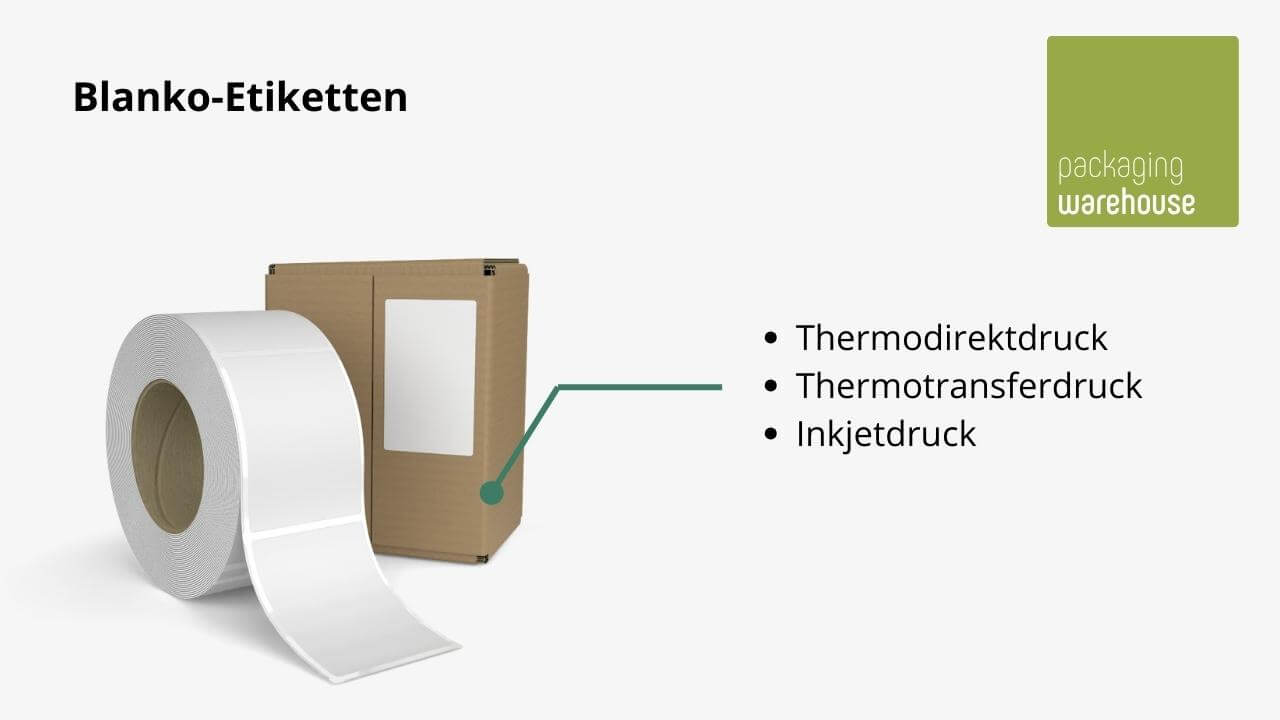
Blank labels
The blank roll labels are suitable for any application and are mainly used as shipping labels – but also as special labels for refrigerated medicines, food labels or as removable labels for offices and warehouses. Blank labels are suitable for labelling by inkjet printing or thermal transfer printing or direct thermal printing and are particularly useful in areas where uniform printing is not possible.
Labelling with standard printers or by hand
For labelling different prices, weights, barcodes, etc.
Thermal transfer printable
Examples of use: Labels for cosmetics, industry, chemicals, etc.
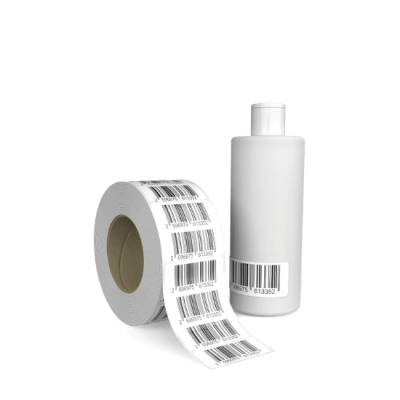
Barcode labels
Barcode labels are an economical and efficient option for labelling goods. Identification via a machine-readable barcode or QR code provides all the information about the product in no time at all – whether in retail or in the warehouse. Simple white labels are ideal for ensuring that the codes are easily readable – for many barcodes, there are standards regarding structure, colours and white space that must be present around the code.
For EAN, numeric labels or labels with QR codes
Time savings through fully automated data capture
Thermal transfer printable
Labels for shipping, transport, trade, etc.
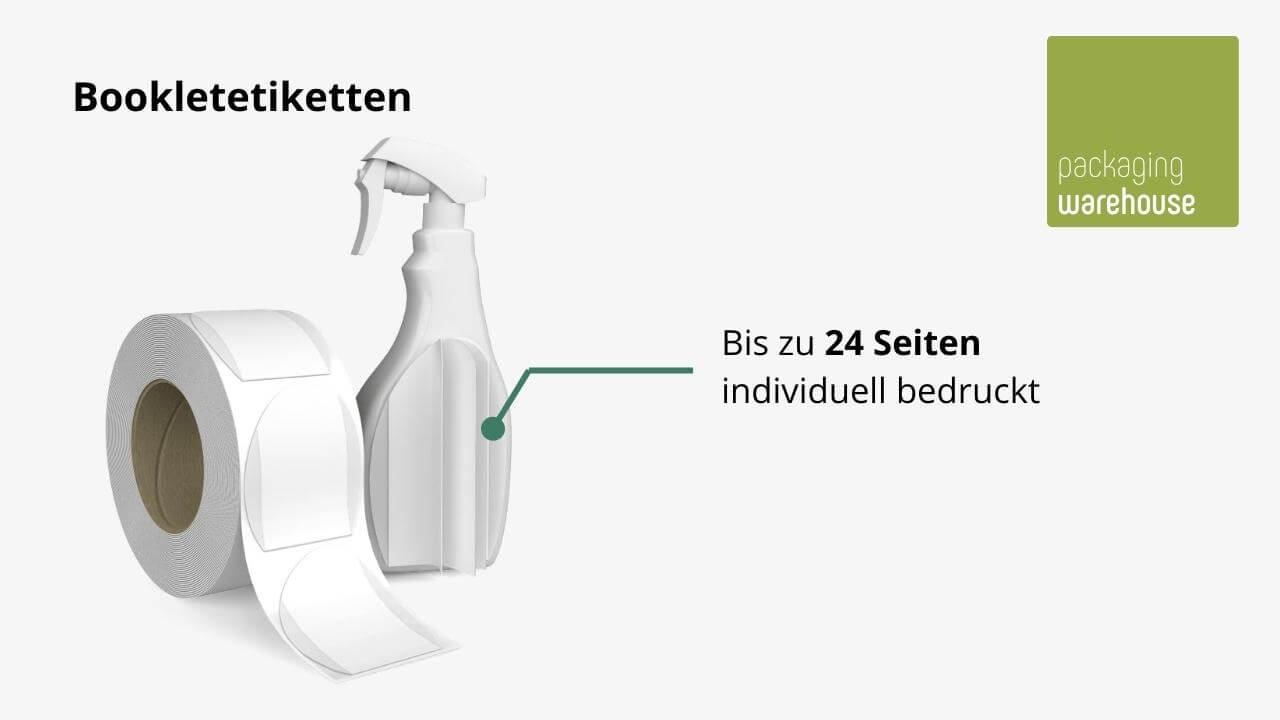
Booklet labels
Booklet labels are special labels that allow you to fit several pages of information into a very small space and are suitable for medicines, cosmetic products, foodstuffs and many other products. The booklet label consists of a base and the paper booklet and can be customised to suit your needs – for round or square containers with up to 24 pages, different types of folds for the paper booklet, with a printed or unprinted base and, optionally, a cover laminate that can be printed or transparent – in this case, the paper booklet is visible from the outside.
Ideal for complying with statutory information requirements
Easy to open and close multiple times
Many formats and fold types for a wide variety of applications
Labels for pharmaceuticals, cosmetics, marketing, etc.
Wrap-around labels
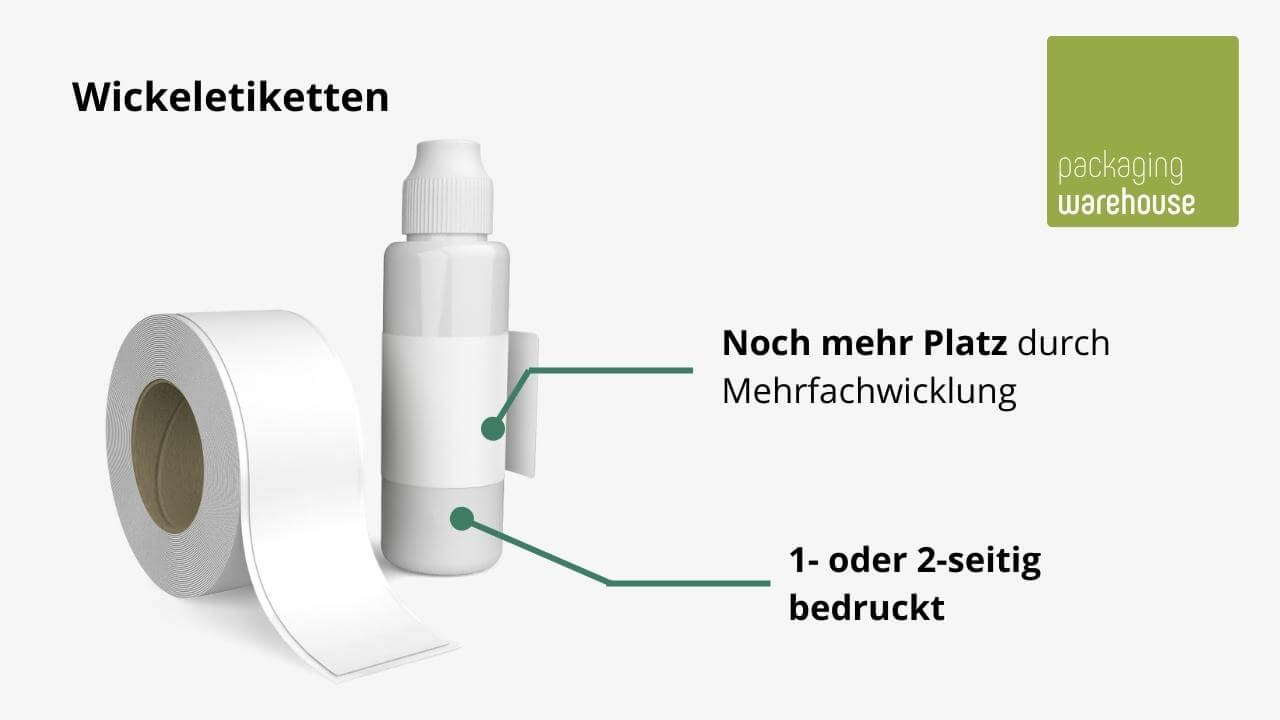
Wrap-around labels can be printed on one or both sides and wrapped around a round container multiple times. They are easy to remove and reseal, and as single labels, they are less expensive than sandwich or booklet labels. Due to their larger surface area, wrap-around labels offer significantly more space for information than conventional roll labels – primarily on cylindrical containers such as bottles, ampoules or syringes.
As peel-off or documentation label with perforation
Also suitable for machine processing
Perfect for cylindrical containers such as ampoules, bottles or jars
Labels for cosmetics, industry, chemicals, etc.
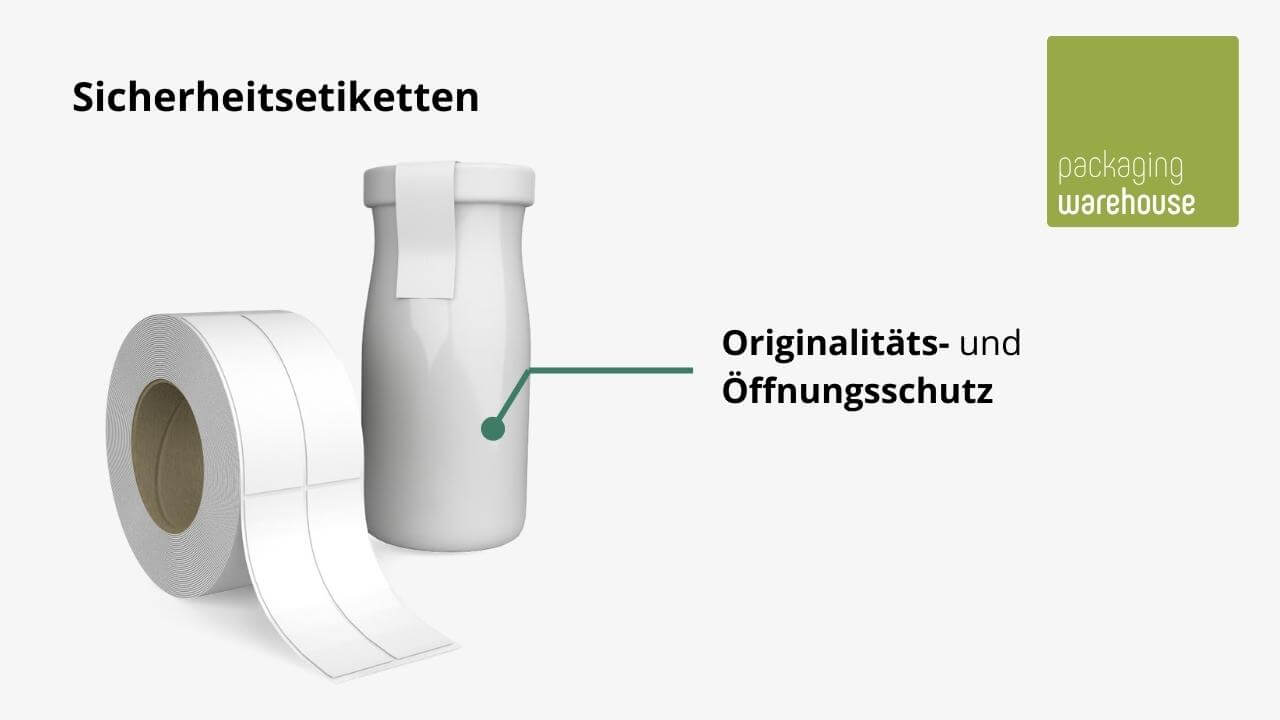
Hologram labels, sealing labels and other closure labels prevent branded goods from being counterfeited or product packaging from being opened prematurely. Counterfeit-proof labels with individual number ranges optimise product protection and are also effective for smaller print runs. Special thermal transfer foils allow information such as security features to be integrated into your labels, which only become visible under UV light.
Effective protection against counterfeiting, copying, fraud, theft and tampering
Resistant to water, petrol, grease, oil, alcohol, acids and alkalis
Labels for pharmaceuticals, industry, trade, etc.
Sheet labels
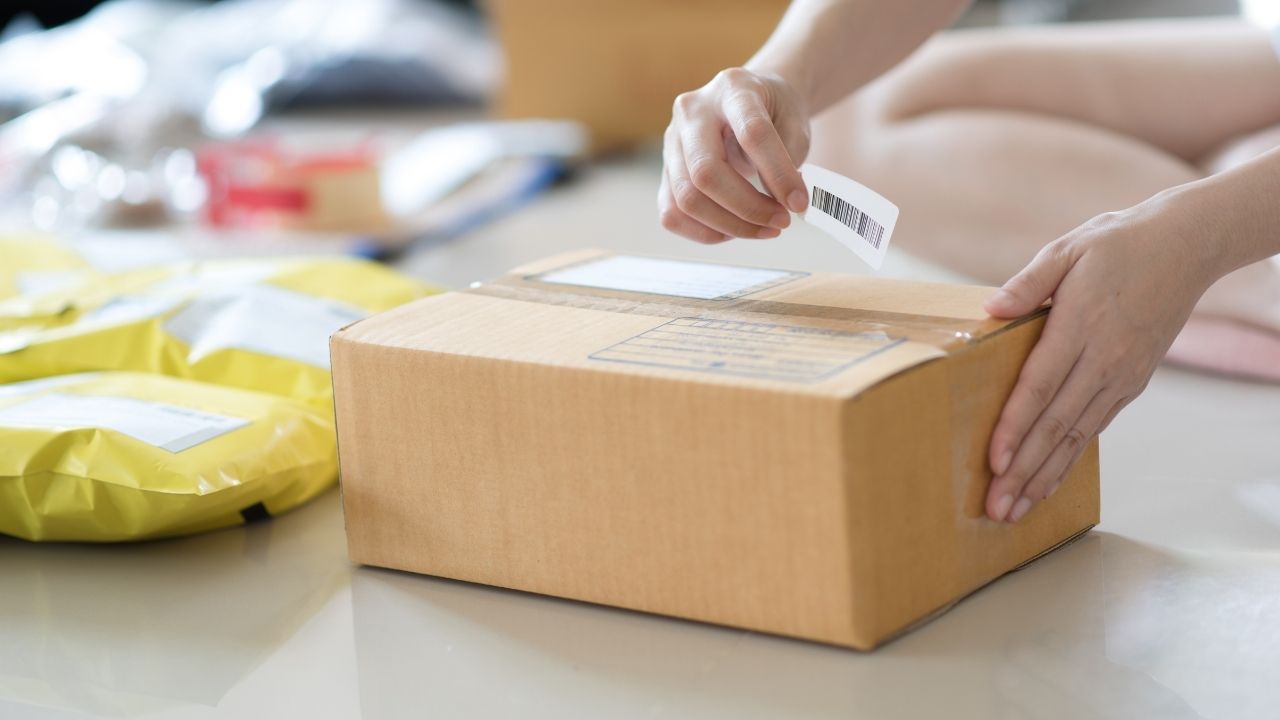
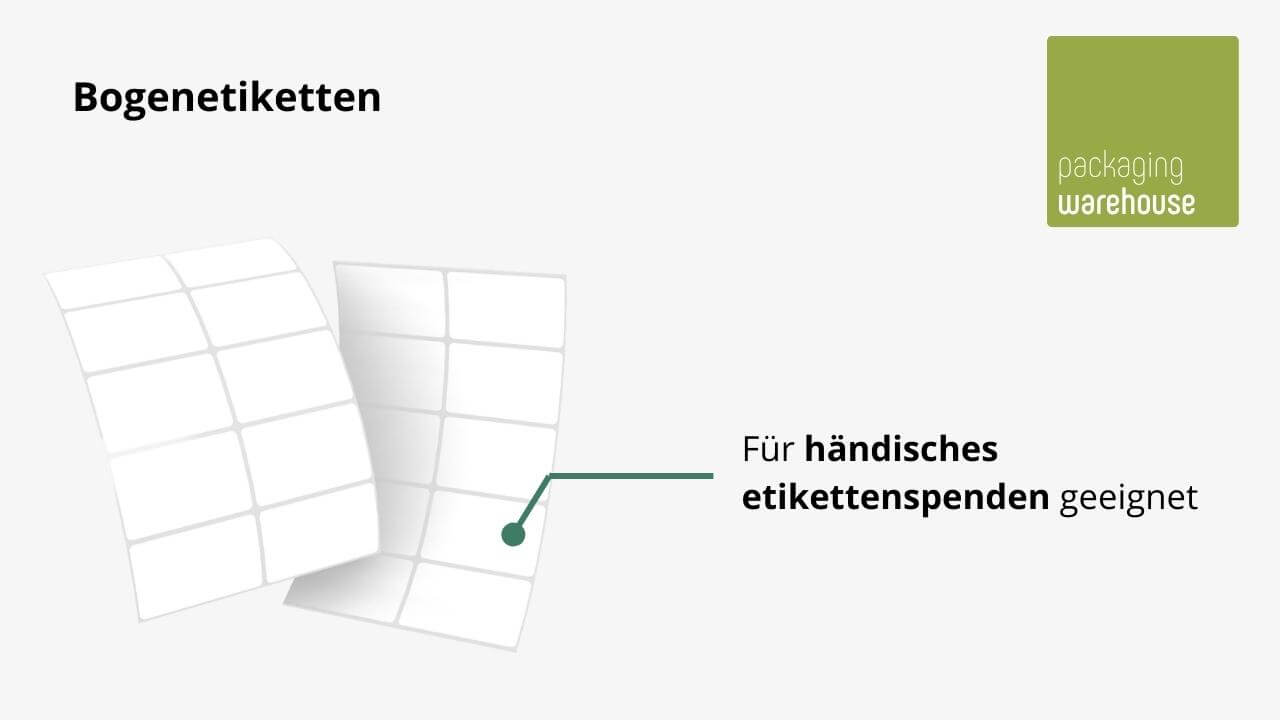
Individually designed sheet labels are the perfect solution for smaller requirements, serve as advertising material or can be used as practical organisational aids and address labels in the office. They can be used as labels for parcels and postal items and can be applied by hand. Adhesive labels in sheet form are easy to transport and can be stored in a space-saving manner.
Individually printable, self-adhesive stickers
Space-saving in transport and storage
Different shapes, sizes and motifs on one sheet
Labels for shipping, marketing, office use, etc.
Labels for every industry
According to the Federal Statistical Office, an industry (or economic sector) is defined as ‘a group of companies or institutions that manufacture similar products or provide similar services within the scope of their economic activities’. This includes, among others, the following industries:
Media
Technology
Pharmaceutical
Industry
Telecommunications
Chemistry
Utility company
Car
Food
All of the industries mentioned require one thing above all else for their products, manufacturing processes, services or warehousing: labels. These versatile stickers are used to label food, accessories, medicines and cosmetics. Shipping and logistics labels are just as important for efficient transport and warehousing. With their specific properties and flexible materials, adhesives and finishes, labels are indispensable for a functioning economy – across all industries.
What makes labels suitable for all industries?
Labels are used in all industries. In Germany alone, millions of labels are affixed every day in major industries such as the automotive industry. These range from stickers in the automotive industry to labels for frozen goods in the pharmaceutical industry to product stickers for foodstuffs. In order to meet the various requirements, each type of label has specific functional properties, depending on the area of application and industry. At packaging warehouse, you can have printed labels that reliably meet your requirements thanks to the large selection of materials, different adhesives, and numerous finishing options. Among other things, they are used in the following areas:
Occupational safety
Hazardous substance labelling
Information management
Safety labelling
Tamper protection
Product labelling
Administrative purposes
Marking of technical components.
Food and beverages industry
Food labels are subject to statutory consumer protection requirements and the Food Information Regulation (LMIV) and provide information about ingredients, additives, the 14 most important allergens and the best-before date or use-by date of food. In addition, a label may contain voluntary (but also legally regulated) information, e.g. about production. The labelling must be legible, understandable, visible and permanent (i.e. not wipeable) on the label permanently attached to the packaging. Text must have a minimum font size of 1.2 mm, based on the average letter size, known as the ‘x’.
Chemical industry
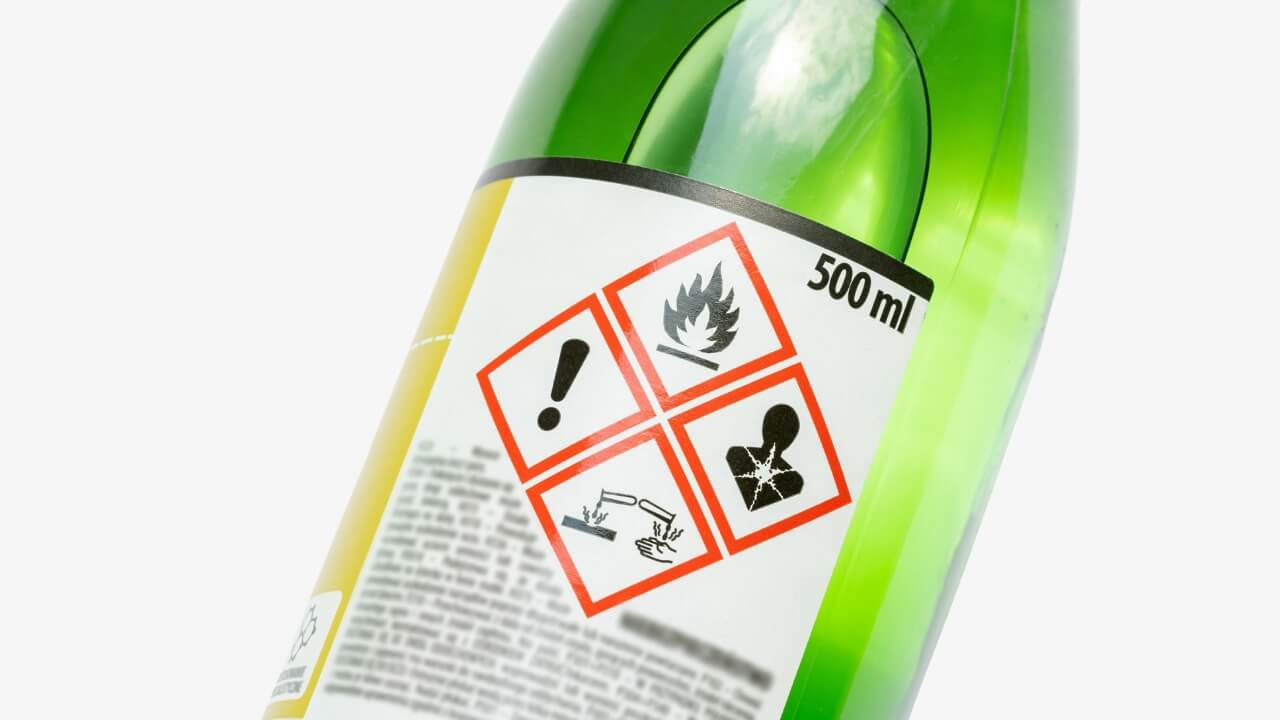
Adhesive labels for the chemical industry warn and inform, e.g. using hazard pictograms, about hazardous substances and must be understandable and clearly structured. General and internationally understandable pictograms and signal colours as well as safety instructions on chemical labels are essential for the safe handling of chemicals. Weather-resistant film labels that also comply with British Standard 5609 Section 2 or 3 and are seawater-resistant are used for the transport of chemicals. In addition, chemical labels must offer maximum safety – i.e. they must be resistant to cold, heat, friction, acids and a variety of other substances. Only flawless labelling can prevent risks and hazards to people and the environment.
Logistics and transport
Labels in the logistics and transport sector are used on cardboard boxes, product packaging and transport containers and ensure that goods reach their recipients safely and on time. To do this, transport, hazardous goods and shipping labels must adhere reliably to a wide variety of surfaces such as wood, paper or film and remain legible. In order for a transport label to fulfil its special purpose, it must have the optimal combination of material (paper or foil) and adhesive (permanent or removable). Transport labels are usually blank labels that are printed directly on site – but they can also be produced with pre-printed logos.
Retail and sales
Labels for retail and sales regulate which price information and price components a label must display, such as the base price and final price of a product, as well as other information. At the same time, price labels must be error-proof and tamper-proof. In supermarkets, permanently adhesive, deep-freeze-suitable labels made of white matt thermal paper are primarily used – with a clearly visible EAN or barcode, price and weight. In bookshops, on the other hand, book packaging materials play a particularly important role in the choice of labels, such as textile covers, high-gloss finishes or open-pored cardboard. Here, adhesives are used that not only adhere securely during transport but can also be removed without leaving any residue.
Pharmaceutical industry
Labels for pharmaceutical packaging must comply with strict regulations regarding resistance, durability, hygiene, quality and safety, and are therefore often produced separately from other labels. Pharmaceutical labels convey information about application and dosage, contents and shelf life, and are also important for marketing the products – booklet labels and sandwich labels are particularly suitable for this purpose. They are available in many sizes and formats and can be customised with colours, logos or images of ingredients. The material and printing of the labels must be resistant to ingredients such as moisture, alcohol and oils.
Kosmetikindustrie
Labels for cosmetic packaging must not only look appealing, but also adhere reliably even when in constant contact with water, oils and other product ingredients, and guarantee that the ingredients remain legible. Labels from packaging warehouse can be used to reliably label boxes, tubes and tins for perfumes, shower gels and oils, as well as many other general personal care products. When labelling cosmetic products, it is important to observe the Nomenclature of Cosmetic Ingredients, abbreviated to INCI. This international guideline contains various regulations relating to ingredients and their labelling. Information about fragrances, hygiene regulations and the best-before date are also important.
Marketing industry
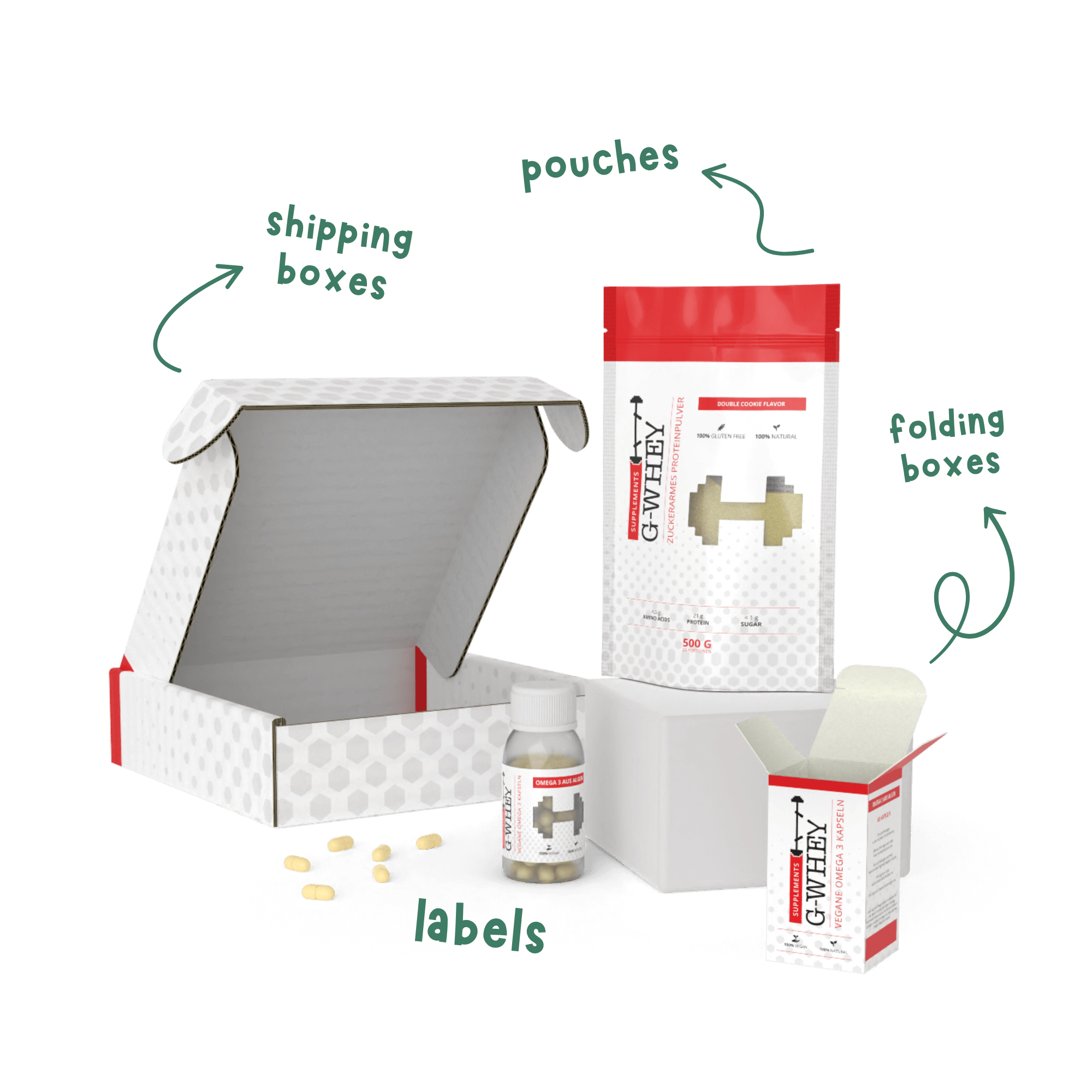
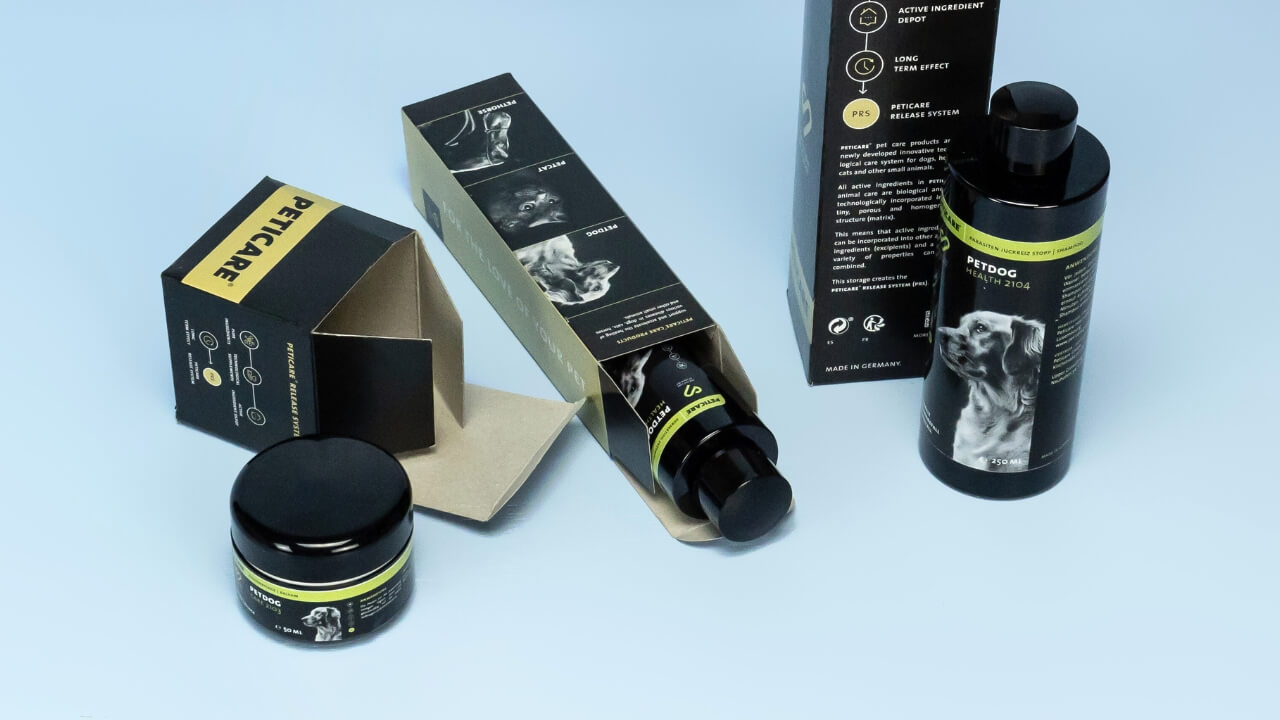
Sticker labels are ideal for increasing brand awareness and improving a company's image. Stickers are everywhere in everyday life, from lampposts and cars to packaging and consumer goods. Stickers are eye-catching, but at the same time they have a certain understatement, so that the advertising does not appear too intrusive. With the right size and design, they are ideal for small print runs, for example to stick on unprinted stand-up pouches, folding boxes or shipping cartons. This saves on the cost of direct printing for promotional items for trade fairs and other events, while still reaching a large number of customers.
Automotive industry
As the industry with the highest turnover in Germany, the automotive industry requires high-quality, reliable labels of outstanding quality. This starts with the labelling of small parts from various suppliers and continues with durable stickers for tyres, cables, engines and axles that remain legible for years. Reliable and versatile labels are also required in manufacturing, logistics and test centres. Due to the high degree of automation, barcode labels and stickers with data matrix codes are primarily used. Film labels are mainly used for this purpose, as they can withstand high temperatures and, depending on the area of application, are either permanently adhesive or removable.
Label materials
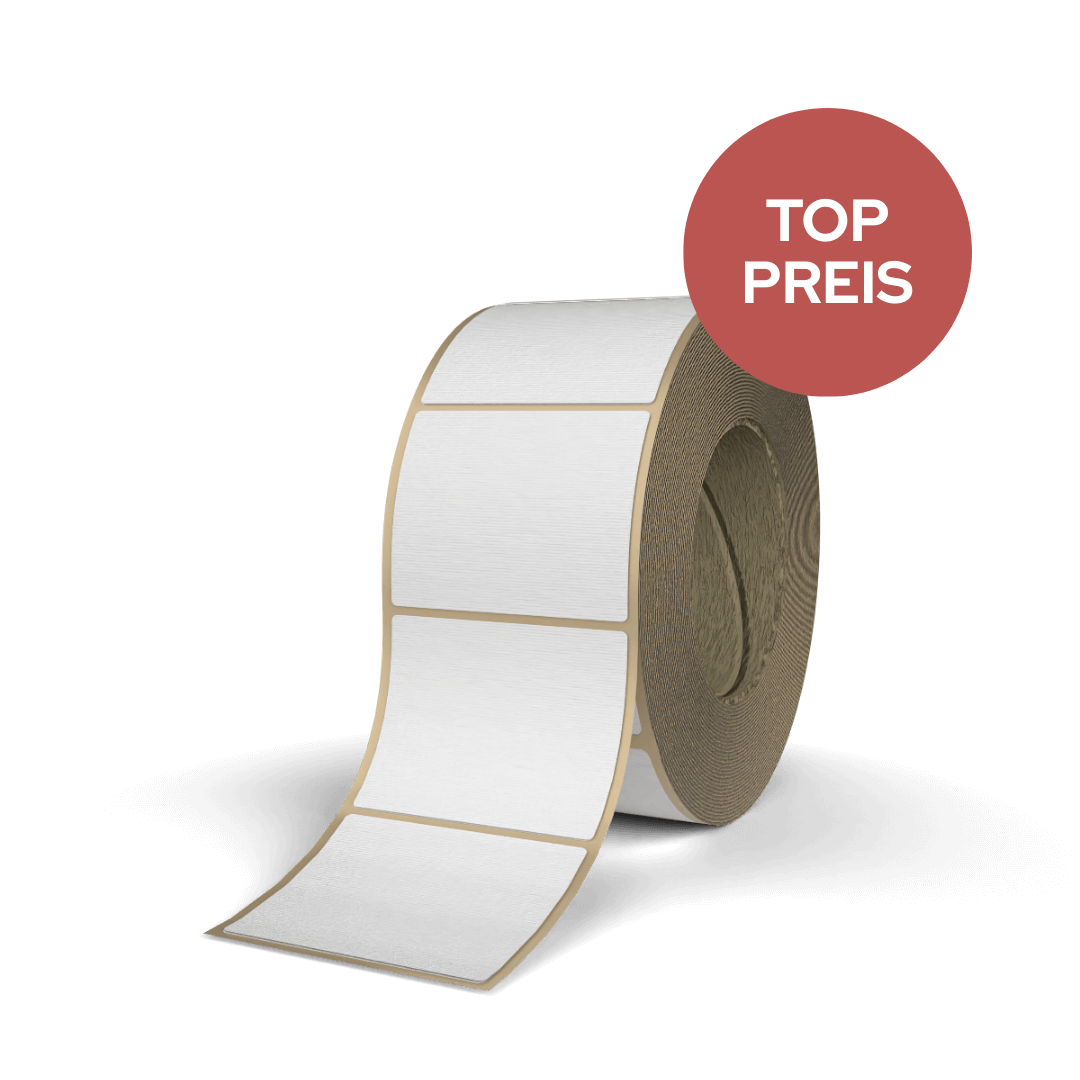
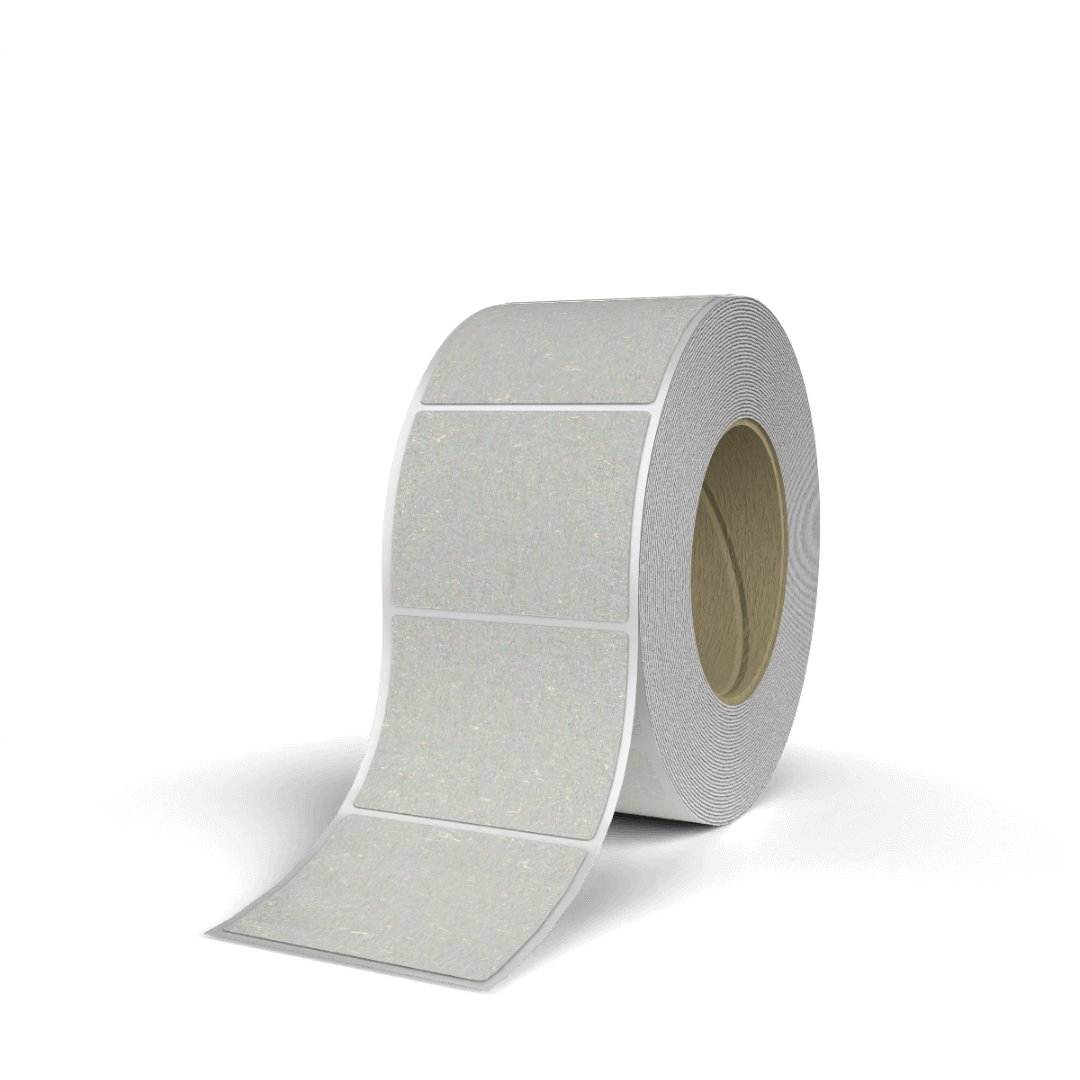
The versatile labels from packaging warehouse are based on various label materials made of paper and film, whose properties largely determine their intended use. Our bestsellers – TOP-Preis-Papier and TOP-Preis-PP – have established themselves as all-rounders that can be used flexibly both indoors and outdoors. We also offer special materials such as opaque, removable, freezer-safe, metallised and neon. But you will also find alternative and sustainable options such as textured paper for wine labels or grass paper labels in the packaging warehouse range.
Material
Material thickness
Material colour
Application
Sustainability
Specific characteristics
Surface
Adhesive
Matt adhesive paper, permanent adhesive (TOP price)
PE adhesive film, white, made from recycled material, permanent adhesive
51 μm
White
Indoor and outdoor use (dry & wet)
Recycelbar Vegan
Made from 100% recycled PE, suitable for thermal transfer printing
shiny
permanently adhesive
Printing technology and finishing: How are labels printed?
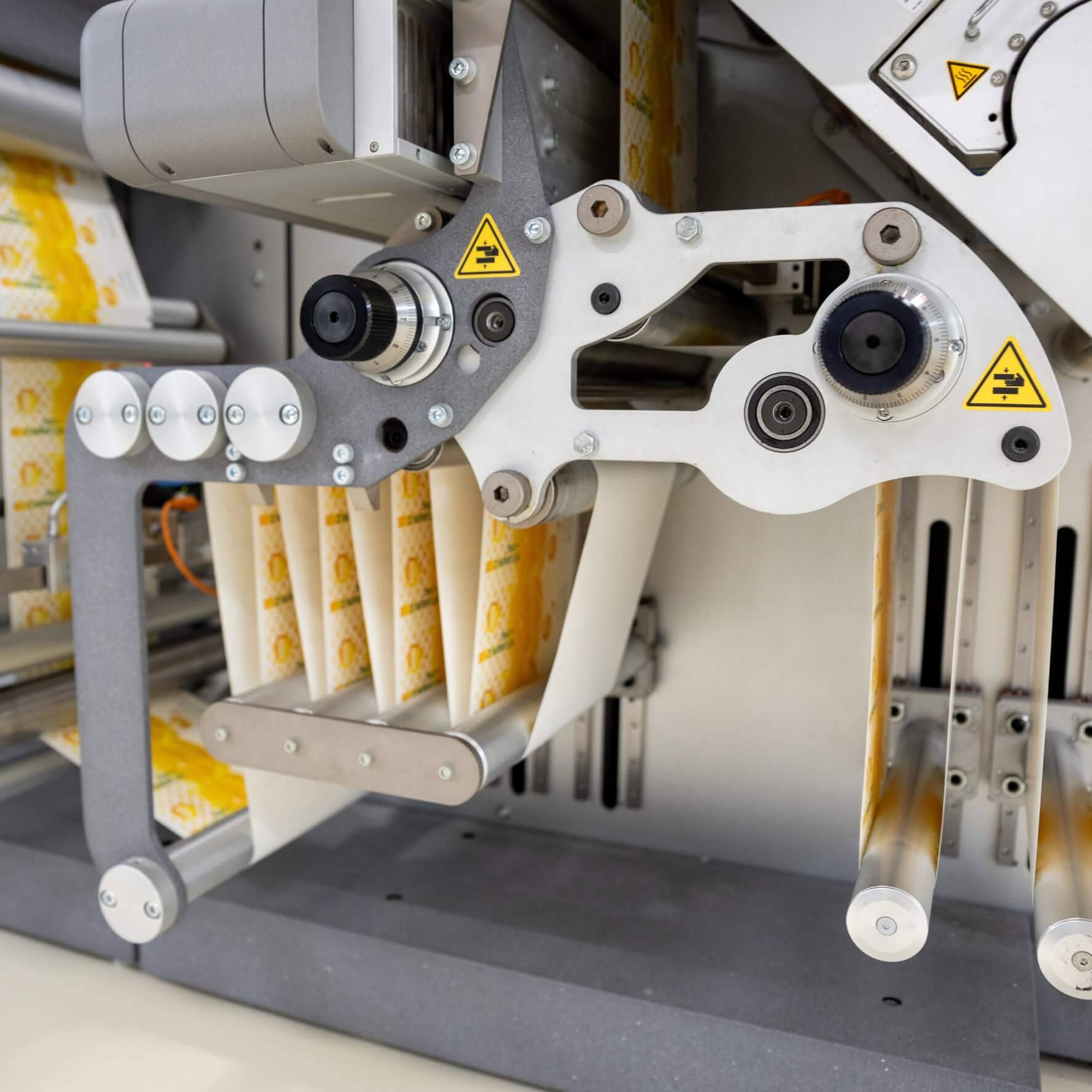
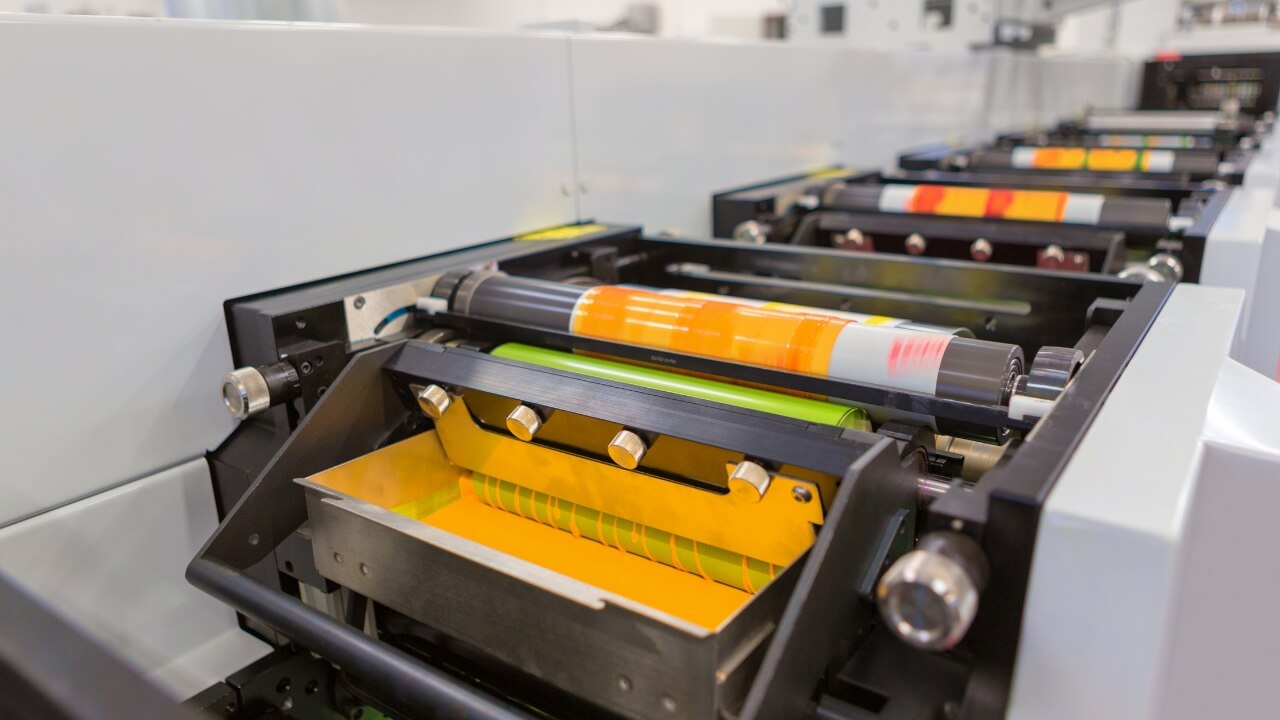
Various printing processes can be used to print labels – digital printing, offset printing, flexographic printing and thermal transfer printing. At packaging warehouse, we print your labels using digital printing or conventional flexographic printing. Which process is used depends on the following main factors:
Special requirements such as printed warning triangle
Digital printing is ideal for small and medium-sized print runs – for large print runs, we use flexographic printing. The configuration of the labels determines which process is ultimately used for label printing: our online calculation determines the best price for your product and automatically selects the right process – for super-fast production and outstanding quality.
What can digital label printing do?
As a non-impact process (NIP), digital printing does not require printing plates – the print files are sent directly to the machine, which then produces the desired labels in four-colour printing (CMYK – cyan, magenta, yellow and black) plus special colours. Digital printing labels combine creative diversity with flexible, highly efficient production. Digital printing now delivers labels at offset level. This means that digitally printed adhesive labels score points with
higher resolution
vibrant colours
Good simulation of Pantone and special colours
sharp-edged fonts
easy personalisation
little preparation required
economic profitability and
faster production.
Digital printing personalises roll labels with individual data such as sequential numbering, coding and changing motifs in order to respond to market trends. We recommend it if you need to print small to medium runs of labels or if your product range includes many different product types or flavours.
The advantages of flexographic printing
Flexographic printing is a versatile printing process that allows a wide variety of materials to be printed. Thanks to short set-up times and high machine speeds, large orders in particular can be produced quickly and in high volumes. Flexographic printing is a relief printing process that uses a printing form made of rubber or flexible plastics. The anilox rollers used ensure even ink absorption and transfer, resulting in optimal coverage with brilliant colours. But flexographic printing offers even more advantages:
Up to eight printing colours can be used
Perfect for using special colours
Optimal halftone curves
Suitable for low migration colours
High speed for large print runs
In addition, many finishing options can be used in flexographic printing, such as cold foil stamping and the direct application of warning triangles. The numerous printing units also enable partial varnishing, which is not possible with Digital printing labels.
Thermal printing – the direct route to labelling
The term thermal printing encompasses three different processes: direct thermal, thermal transfer and thermal sublimation printing. Although the printing processes differ, they have one thing in common: they are all ‘pressurless’. Thermal printing does not require a printing plate, as the print motif is transferred using heat. Thermal transfer printing requires a resin ribbon, which transfers ink onto the paper. At packaging warehouse, you can order labels with a special coating that makes them suitable for thermal transfer printing. This is required, for example, when printing a best-before date during the filling process.
Thermal paper is essential for the printing process: it contains a pH-sensitive dye, a colour developer and a solvent. When exposed to heat, the solvent melts, causing the dye and developer to mix. The resulting reaction turns the thermal paper black in the relevant areas.
Due to their high printing speed and the ability to print labels directly on site using a handy thermal printer, direct thermal labels are primarily used in the following areas:
Tickets
Parking tickets
Shipping label
Pallet stickers and much more.
How can you enhance your labels?
When it comes to labels, the term ‘finishing’ does not only have a visual component – as the names ‘protective coating’ and ‘protective laminate’ suggest, these coatings are also very important for the label's resistance. They provide even more reliable protection for the information on the labels against environmental influences such as moisture, scratches and colour fading, and guarantee good legibility even under difficult conditions.
Finishing
Surfaces
Colour
Application
Sustainability
Specific characteristics
Protective coating
glossy / matt
transparent
Achieves a simple visual effect
Yes
Good surface sealing & visual enhancement
Protective laminate
glossy / matt / soft-touch
transparent / milky
For a tactile and visual effect.
Yes – single-sided laminates can be separated again during the recycling process.
Excellent surface sealing & visual enhancement
Hot foil stamping
glossy
gold / silver / bronze
Emphasises individual design elements.
n/a
For an elegant look in gold, silver and bronze
Spot painting
glossy / matt
partially
Creates special alternating glossy-matt effects, e.g. matt label with glossy logo
Yes, paints can be washed out during the recycling process.
n/a
At packaging warehouse, we produce transparent tactile warning triangles with side lengths of 9 mm and 18 mm. What makes them special is that, after the actual printing process, our warning triangles are printed individually on each label in an order using a special machine.
Planning labels correctly
Good planning is essential for optimal label printing results. At packaging warehouse, you are not limited to standard formats, but can customise various parameters. Here we have listed some key points to consider before printing:
Which direction should the label be wound in?
The winding direction is crucial for the subsequent application of the label – you should therefore clarify which equipment you are using and which winding direction you need.
Outer diameter of the roller?
When ordering, attention should also be paid to the diameter of the label roll – it must not be larger than the mounting disc of the label dispenser used.
Corner radius?
As a rule, our label corners have a radius of 2 millimetres – if no corner radius or a different value is required, our customer service team will be happy to help.
Core diameter?
Roll cores of various diameters are used for roll labels – depending on the thickness of the mandrel on the label dispenser, these are 25, 40 and 76 millimetres.
Label spacing?
The distance between labels on the backing material is usually 3 millimetres – if you require a different value, please contact our customer service team. If your label dispenser uses a sensor instead of a fixed value, the label spacing is not relevant.
If you have any questions about the planning process or the calculation of your labels, you can of course contact our team at any time.