


 Folding boxes





 Shipping boxes





 Stand-up pouch


.png) Labels
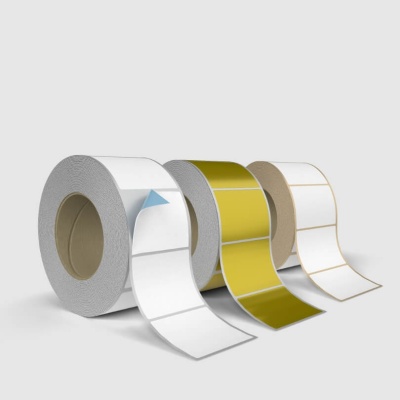
Labels 



 Paper cans
  Sample boxes
 In the context of flexible packaging, a monomaterial refers to a material that is primarily made from one type of plastic – typically PE or PP-based. As a common rule of thumb for design for recycling, a structure is considered ‘mono’ if at least 90% of its total weight consists of the target polymer. The remaining portion may consist of printing inks, adhesives or thin functional layers such as barrier films – provided these do not interfere with the recycling process.
Common mono-materials:
- Mono-PE duplex: MDO-PE / PE-EVOH-PE (COEX-PE with EVOH <5%)
- Mono-PP triplex: OPP/OPPmet/CPP
Mono-material vs. mono-film
The term mono-film describes the specific design of a single film. Monomaterial, on the other hand, describes the material logic of a multi-layer film composite, which consists predominantly of a polymer family.
Examples:
- Mono-film: Single PE film
- Monomaterial: Laminate composite of MDO-PE film and extruded LDPE film
Sources as of 23 January 2025:
- CEFLEX – D4ACE Guidelines;
- RecyClass – Natural PE Flexible Films
- Innoform